
Many foods that are perfectly safe for people can be dangerous for dogs. Some can cause stomach upset, while others, including xylitol, grapes, raisins, chocolate, onions, garlic, macadamia nuts, alcohol, and caffeine, can cause serious or potentially life-threatening illness. (ASPCA)
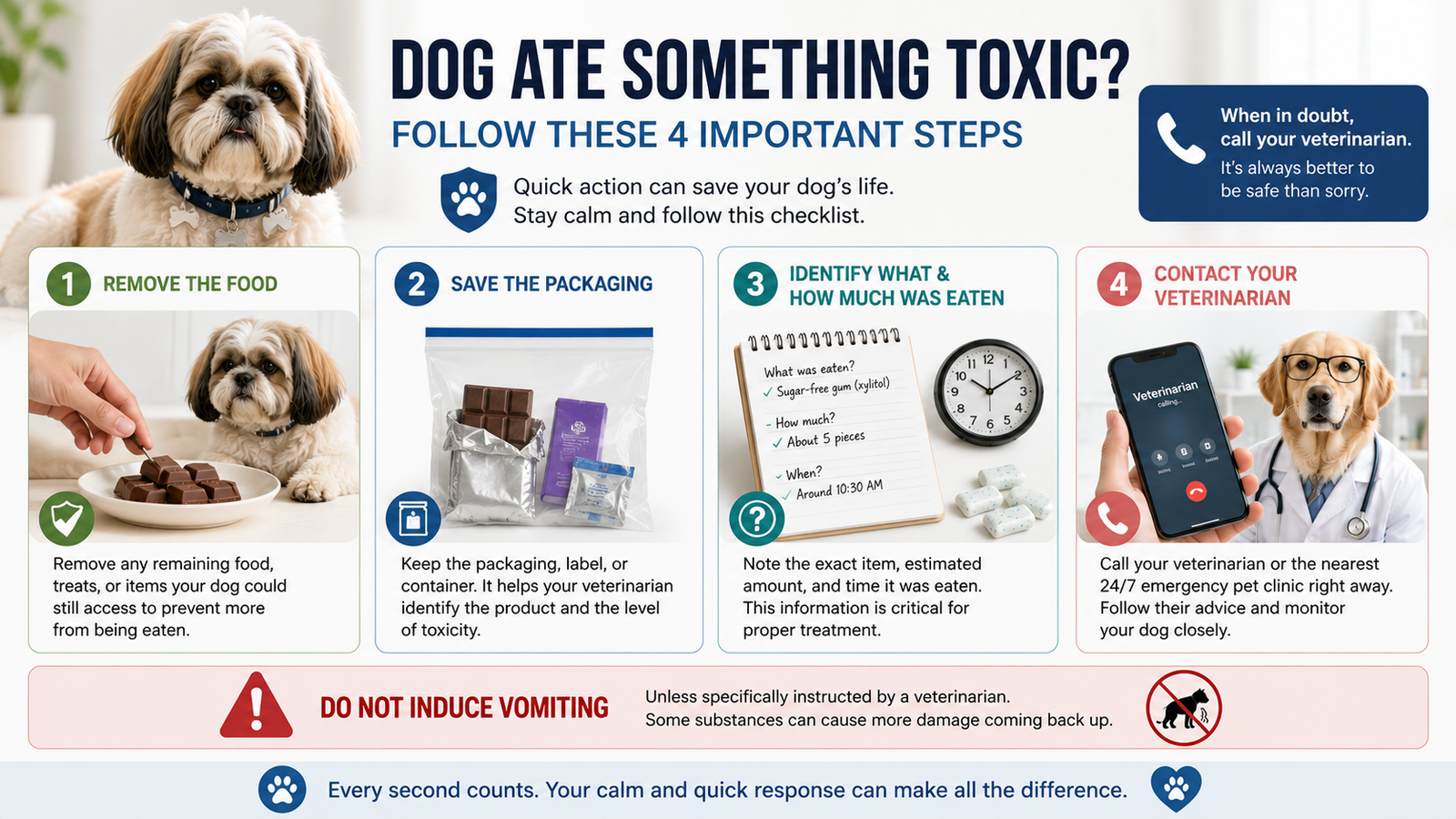
If your dog may have eaten something toxic, do not wait for symptoms to appear before seeking professional advice. Remove the remaining food, save its packaging, note approximately how much was eaten and when, and contact your veterinarian or an emergency veterinary clinic.
For broader nutrition and everyday care, see our Complete Dog Care Guide: Food, Health, Grooming, Exercise & Puppy Care.
This guide explains the most important toxic human foods for dogs, common symptoms, how quickly signs may appear, what to do after accidental ingestion, and how to prevent poisoning at home.
Suspect Your Dog Ate Something Toxic?
Contact a veterinarian or emergency veterinary clinic promptly.
Do not give home remedies and do not induce vomiting unless a veterinarian or qualified animal poison-control professional specifically tells you to. (Pet Poison Helpline)
These services are U.S.-based. If you are outside the U.S., contact your local veterinarian or nearest emergency veterinary hospital.
What Foods Are Poisonous to Dogs?
The most important human foods and food-related products that dogs should not consume include:
- Xylitol
- Grapes
- Raisins
- Chocolate
- Onions
- Garlic
- Chives
- Leeks
- Macadamia nuts
- Alcohol
- Coffee and other caffeinated products
- Raw yeast dough
Very fatty foods are another concern. They are not necessarily as poisonous as xylitol or chocolate, but large amounts can cause digestive problems and may contribute to pancreatitis in susceptible dogs. (ASPCA)
The seriousness of an exposure depends on the specific substance, amount consumed, concentration, dog’s size, health, and how quickly professional treatment begins.
Toxic Foods for Dogs: Quick Reference
| Toxic Food & Risk | Symptoms, Timing & What to Do |
|---|---|
| Xylitol 🔴 Very High | Symptoms: Vomiting, weakness, reduced activity, poor coordination, collapse, tremors and seizures. Liver injury can also occur. Timing: Blood sugar problems can begin very quickly, sometimes within 20 to 60 minutes, although some cases are delayed. Action: Treat as an emergency and contact a veterinarian immediately. (U.S. Food and Drug Administration) |
| Grapes 🔴 Very High | Symptoms: Vomiting, diarrhea, lethargy, loss of appetite, weakness and kidney problems. Timing: Gastrointestinal signs may occur within the first day, while kidney injury can develop later. Action: Contact a veterinarian promptly. There is no reliably safe amount to assume. (Merck Veterinary Manual) |
| Raisins 🔴 Very High | Symptoms: Vomiting, diarrhea, lethargy, weakness and kidney injury. Timing: Signs can begin within the first day, with kidney complications potentially developing later. Action: Seek veterinary advice promptly after ingestion. (Merck Veterinary Manual) |
| Chocolate 🔴 High to Very High | Symptoms: Vomiting, diarrhea, restlessness, rapid heart rate, abnormal heart rhythm, tremors and seizures. Timing: Often several hours after ingestion. Action: Contact a veterinarian promptly, especially after dark chocolate, baking chocolate or cocoa exposure. (ASPCA) |
| Onions 🔴 High | Symptoms: Vomiting, weakness, lethargy, pale gums, rapid breathing and anemia-related signs. Timing: Red blood cell damage can take several days to become obvious. Action: Contact your veterinarian after significant exposure. (ASPCA) |
| Garlic 🔴 High | Symptoms: Gastrointestinal upset, weakness, lethargy and anemia-related signs. Timing: Effects can be delayed. Action: Contact your veterinarian, especially after concentrated garlic or garlic powder exposure. (ASPCA) |
| Chives 🔴 High | Symptoms: Gastrointestinal irritation, weakness and red blood cell damage. Timing: Signs may be delayed. Action: Contact a veterinarian if your dog has eaten a significant amount. (ASPCA) |
| Leeks 🔴 High | Symptoms: Gastrointestinal upset, weakness and anemia-related signs. Timing: Effects may be delayed. Action: Seek veterinary advice after ingestion. (Merck Veterinary Manual) |
| Macadamia Nuts 🟠 Moderate to High | Symptoms: Weakness, depression, vomiting, tremors, poor coordination and increased body temperature. Timing: Signs can occur within about 12 hours. Action: Contact your veterinarian. (Merck Veterinary Manual) |
| Alcohol 🔴 High | Symptoms: Vomiting, diarrhea, poor coordination, depression, breathing problems, coma and potentially death. Timing: Alcohol can be absorbed quickly. Action: Seek veterinary advice promptly. (ASPCA) |
| Coffee & Caffeine 🔴 High | Symptoms: Restlessness, vomiting, panting, rapid heart rate, tremors and seizures. Timing: Signs can develop relatively quickly. Action: Contact a veterinarian after significant exposure. (ASPCA) |
| Raw Yeast Dough 🔴 High | Symptoms: Abdominal expansion, discomfort, vomiting and signs related to alcohol production. Timing: Problems develop as the dough expands and ferments. Action: Contact a veterinarian promptly. (ASPCA) |
| Very Fatty Foods 🟠 Risk Varies | Symptoms: Vomiting, diarrhea, abdominal pain and reduced appetite. Timing: Problems such as pancreatitis may be delayed. Action: Contact a veterinarian if symptoms develop or a large amount was consumed. (ASPCA) |
Important: The risk categories above are for practical awareness, not a diagnosis. There is no universal toxic dose that applies to every dog. Do not use the table to decide that an exposure is automatically safe because the amount appears small.
1. Xylitol
Why Is Xylitol Toxic to Dogs?
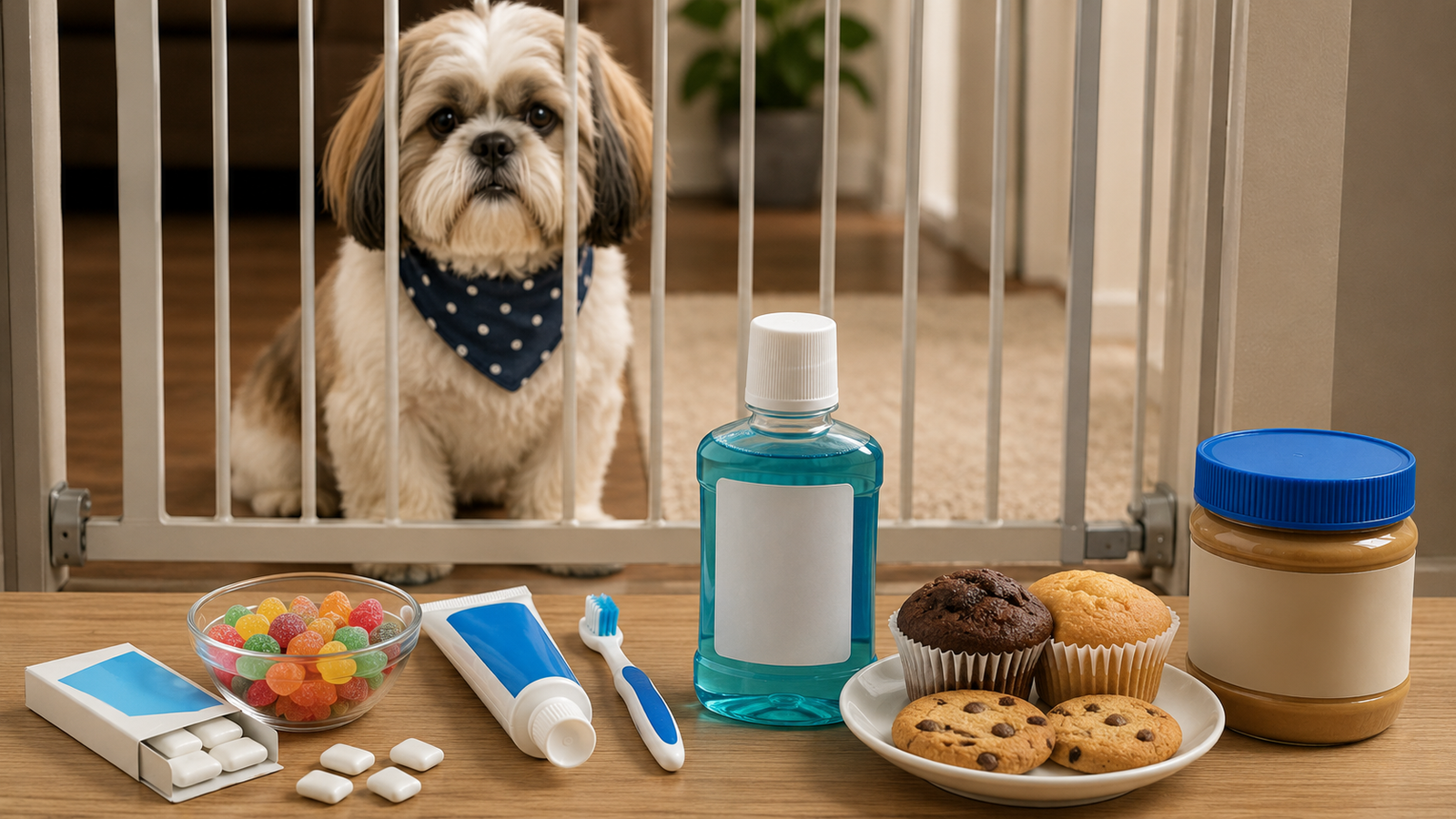
Xylitol is one of the most important ingredients dog owners need to recognize. Xylitol is a sugar alcohol used in some sugar-free and reduced-sugar products. It may also appear under names such as birch sugar or wood sugar. (U.S. Food and Drug Administration)
It can be found in products such as:
- Sugar-free chewing gum
- Sugar-free candy
- Some peanut and nut butters
- Baked goods
- Sugar-free desserts
- Toothpaste
- Mouthwash
- Some medicines
- Dietary supplements
The FDA warns that xylitol can cause a rapid release of insulin in dogs, resulting in a dangerous drop in blood sugar. Severe cases can also involve liver injury or failure. (U.S. Food and Drug Administration)
Symptoms of Xylitol Poisoning
Possible signs include:
- Vomiting
- Reduced activity
- Weakness
- Difficulty walking
- Poor coordination
- Collapse
- Tremors
- Seizures
- Coma
Severe cases can involve liver failure and bleeding problems. (U.S. Food and Drug Administration)
How Quickly Can Xylitol Affect a Dog?
Signs of low blood sugar can begin within 20 to 60 minutes in some cases, although onset can vary depending on the product and how quickly the xylitol is absorbed. Liver complications may appear later. (U.S. Food and Drug Administration)
What Should You Do?
Treat suspected xylitol ingestion as an emergency.
Contact a veterinarian or emergency veterinary hospital immediately.
Do not wait for symptoms.
Do not attempt to treat the dog at home.
2. Grapes
Are Grapes Toxic to Dogs?
Yes. Grapes should not be intentionally fed to dogs.
Grape ingestion has been associated with acute kidney injury in dogs. Current veterinary guidance identifies tartaric acid as an important suspected toxic component, but the amount of tartaric acid can vary between grapes and products, which contributes to unpredictable outcomes. (Merck Veterinary Manual)
Possible Symptoms
- Vomiting
- Diarrhea
- Loss of appetite
- Lethargy
- Weakness
- Changes in urination
- Reduced urine production
- Kidney injury
How Quickly Can Symptoms Appear?
Some gastrointestinal symptoms may appear within the first day, but kidney complications can develop later.
What Should You Do?
If your dog eats grapes, contact a veterinarian promptly.
Do not assume that one grape or a small amount is automatically harmless.
3. Raisins
Are Raisins Toxic to Dogs?
Yes. Raisins should be treated as potentially toxic to dogs.
Raisins have been associated with kidney failure in dogs. The amount needed to cause illness is not predictable enough for owners to use a simple “safe amount” rule. (Merck Veterinary Manual)
Raisins can also be hidden in:
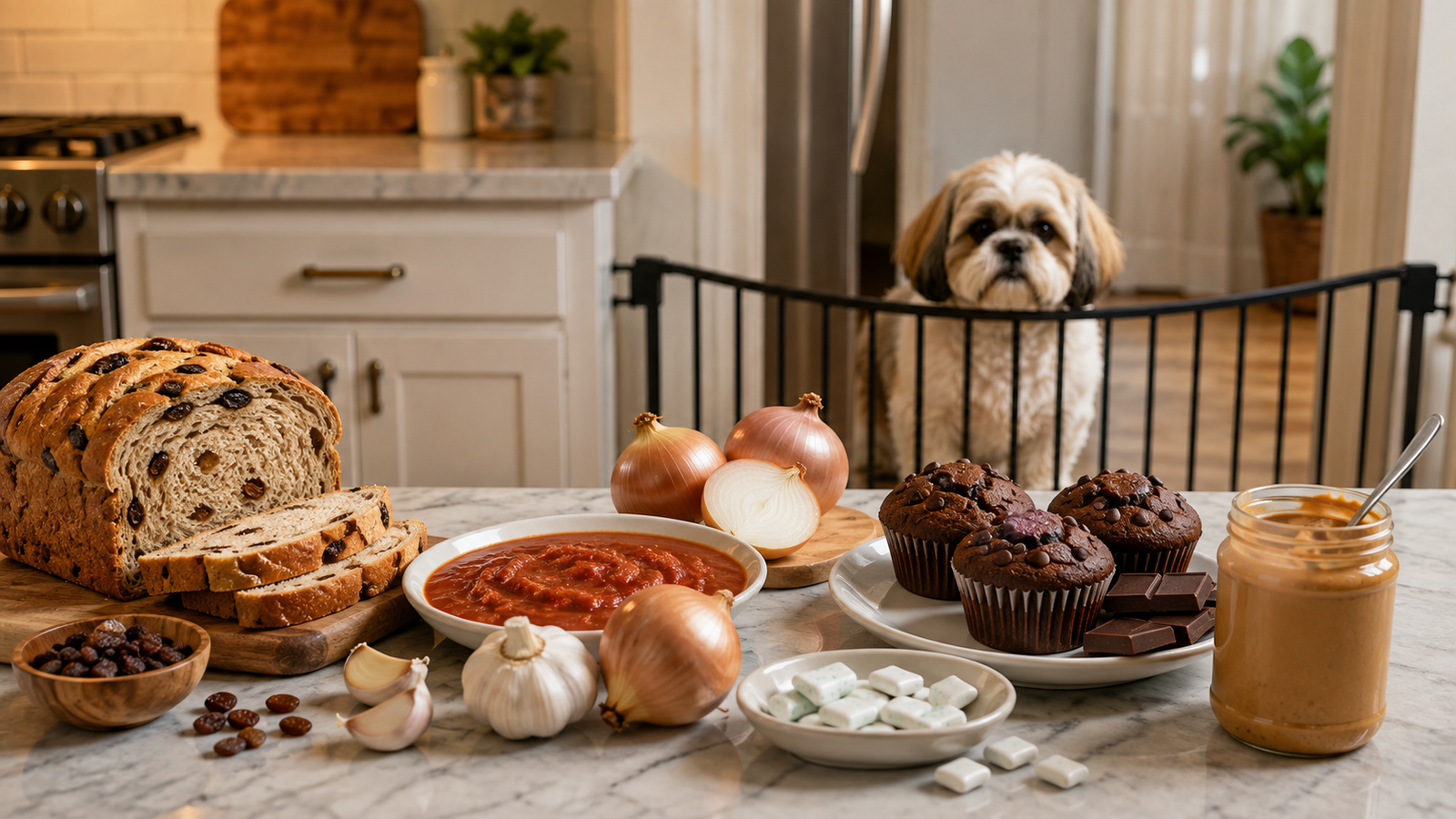
- Bread
- Cookies
- Cakes
- Cereals
- Trail mixes
- Baked foods
Possible Symptoms
- Vomiting
- Diarrhea
- Loss of appetite
- Lethargy
- Weakness
- Changes in urination
- Kidney problems
What Should You Do?
Contact your veterinarian promptly after ingestion.
Do not wait for kidney-related symptoms to appear.
4. Chocolate
Is Chocolate Toxic to Dogs?
Yes. Chocolate can be toxic to dogs.
Chocolate contains methylxanthines, particularly theobromine and caffeine.
The risk depends on:
- Type of chocolate
- Amount eaten
- Dog’s body weight
- Individual health
- Other ingredients in the product
Dark chocolate, baking chocolate and cocoa products generally contain higher concentrations of these compounds than milk chocolate. (ASPCA)
Symptoms
Possible signs include:
- Vomiting
- Diarrhea
- Restlessness
- Increased activity
- Panting
- Rapid heart rate
- Abnormal heart rhythm
- Tremors
- Seizures
Severe chocolate poisoning can be life-threatening. (ASPCA)
What Should You Do?
If your dog eats chocolate, keep the packaging and determine:
- Type of chocolate
- Approximate amount
- Time eaten
- Dog’s approximate weight
Then contact your veterinarian or animal poison-control service.
5. Onions
Are Onions Toxic to Dogs?
Yes. Onions can be harmful to dogs and can damage red blood cells.
Onions are members of the Allium family.
The risk is not limited to raw onions. Dogs can also be exposed through:
- Cooked onions
- Dried onions
- Onion powder
- Soups
- Sauces
- Seasoning mixes
- Leftovers
Allium exposure can cause gastrointestinal irritation and red blood cell damage that may result in anemia. (ASPCA)
Possible Symptoms
- Vomiting
- Weakness
- Lethargy
- Pale gums
- Rapid breathing
- Reduced exercise tolerance
- Dark urine
- Collapse
Why Can Symptoms Be Delayed?
The red blood cell damage does not necessarily produce obvious symptoms immediately.
A dog can appear normal shortly after eating onions and develop anemia-related signs later.
6. Garlic
Is Garlic Toxic to Dogs?
Yes. Garlic can be harmful to dogs.
Garlic is also part of the Allium family.
It may be found in:
- Garlic cloves
- Garlic powder
- Seasoning blends
- Sauces
- Marinades
- Prepared foods
Concentrated forms such as garlic powder deserve particular caution.
Possible Symptoms
- Vomiting
- Weakness
- Lethargy
- Pale gums
- Rapid breathing
- Dark urine
- Anemia-related signs
What Should You Do?
If your dog has eaten a significant amount of garlic, particularly concentrated garlic products, contact your veterinarian.
7. Chives
Are Chives Toxic to Dogs?
Chives should not be fed to dogs.
Chives belong to the Allium family along with onions and garlic.
They can cause gastrointestinal irritation and red blood cell damage. (ASPCA)
Potential symptoms include:
- Vomiting
- Weakness
- Lethargy
- Pale gums
- Dark urine
- Anemia-related signs
Because some effects may be delayed, a dog appearing normal immediately after exposure does not necessarily mean the exposure is harmless.
8. Leeks
Are Leeks Toxic to Dogs?
Leeks should be kept away from dogs.
Like onions, garlic and chives, leeks belong to the Allium family.
They may be present in:
- Soups
- Stews
- Sauces
- Prepared meals
- Leftovers
If your dog eats a significant amount, contact your veterinarian for advice.
9. Macadamia Nuts
Are Macadamia Nuts Toxic to Dogs?
Yes. Macadamia nuts can cause illness in dogs.
Possible signs include:
- Weakness
- Depression
- Vomiting
- Tremors
- Poor coordination
- Increased body temperature
Merck Veterinary Manual reports that signs can develop within approximately 12 hours and generally resolve within 12 to 48 hours, although veterinary assessment is still appropriate. (Merck Veterinary Manual)
What Should You Do?
Contact your veterinarian and provide:
- Approximate amount eaten
- Time of ingestion
- Dog’s weight
- Any symptoms
10. Alcohol
Can Dogs Drink Alcohol?
No. Dogs should never be given alcohol.
Alcohol can cause serious illness depending on the amount and concentration consumed.
Possible signs include:
- Vomiting
- Diarrhea
- Poor coordination
- Depression
- Breathing problems
- Tremors
- Coma
- Potentially fatal complications
(ASPCA)
Alcohol can be present in more than drinks. Dogs may also encounter alcohol in certain foods or products.
What Should You Do?
Contact a veterinarian promptly after alcohol ingestion, particularly if your dog is showing neurological or breathing problems.
11. Coffee and Caffeine
Can Dogs Drink Coffee?
No. Coffee and other concentrated caffeinated products should not be given to dogs.
Caffeine can affect the nervous and cardiovascular systems.
Potential sources include:
- Coffee
- Espresso
- Caffeinated tea
- Energy drinks
- Caffeine tablets
- Caffeinated supplements
- Chocolate products
Possible Symptoms
- Restlessness
- Vomiting
- Panting
- Rapid heart rate
- Tremors
- Weakness
- Seizures
Chocolate and coffee both contain methylxanthines that can cause serious effects in pets. (ASPCA)
What Should You Do?
Contact a veterinarian if your dog consumes a significant amount of caffeine, especially concentrated products.
12. Raw Yeast Dough
Why Is Raw Yeast Dough Dangerous for Dogs?
Raw yeast dough can be dangerous because it can expand in the stomach and produce alcohol as it ferments.
This can lead to:
- Abdominal expansion
- Pain
- Vomiting
- Alcohol toxicity
- Potential stomach complications
ASPCA identifies raw yeast dough as a food hazard for pets. (ASPCA)
What Should You Do?
If your dog eats raw yeast dough, contact your veterinarian promptly.
Do not wait for the dough to expand before seeking advice.
13. Very Fatty Foods
Are Fatty Foods Toxic to Dogs?
Very fatty foods are not necessarily “poisons” in the same way as xylitol or chocolate, but they can still make dogs seriously ill.
Examples include:
- Large amounts of bacon
- Greasy meat scraps
- Fat trimmings
- Butter
- Heavy gravy
- Very fatty leftovers
Large amounts can cause digestive upset and may contribute to pancreatitis in susceptible dogs. ASPCA also warns that rich human foods can cause stomach upset and pancreatitis. (ASPCA)
Possible Symptoms
- Vomiting
- Diarrhea
- Abdominal pain
- Reduced appetite
- Lethargy
How Quickly Do Symptoms of Toxic Food Exposure Appear?
There is no single timeline for toxic food poisoning in dogs. Different substances behave differently. Some toxins can cause problems within minutes or hours, while others may produce delayed complications.
| Food or Substance | Possible Timing |
|---|---|
| Xylitol | Blood sugar problems can begin within about 20 to 60 minutes in some cases, but onset can vary. (U.S. Food and Drug Administration) |
| Caffeine | Signs can develop relatively quickly after ingestion. |
| Macadamia nuts | Signs may occur within approximately 12 hours. (Merck Veterinary Manual) |
| Chocolate | Signs commonly develop several hours after ingestion. |
| Grapes/raisins | Gastrointestinal signs may occur within the first day, while kidney injury can develop later. (Merck Veterinary Manual) |
| Onions/garlic | Anemia-related effects can be delayed for several days. (ASPCA) |
| Raw yeast dough | Problems develop as the dough expands and ferments. |
| Fatty foods | Digestive or pancreatitis-related signs may be delayed. |
These are general patterns, not guarantees.
A dog can become seriously ill without immediately showing obvious symptoms.
That is why you should not use “my dog looks fine” as proof that a toxic exposure is harmless.
What Should I Do If My Dog Eats Something Toxic?
If you suspect your dog has eaten a toxic food, follow these steps.
1. Remove the Remaining Food
Move the food away from your dog and prevent further access.
If multiple pets are present, check whether another animal could also have eaten it.
2. Identify What Was Eaten
Try to determine:
- Exact food
- Product name
- Ingredients
- Approximate amount
- Time of ingestion
If the food was processed, the ingredient list can be particularly important.
3. Save the Packaging
Keep:
- Wrapper
- Box
- Bottle
- Ingredient label
- Remaining food
The packaging can help the veterinarian determine exactly what your dog was exposed to.
4. Record Your Dog’s Information
Have these details ready:
- Approximate weight
- Age
- Breed
- Existing health problems
- Current medications
- Current symptoms
You do not need to know every detail before calling. Do not delay veterinary advice while trying to calculate an exact amount.
5. Contact a Veterinarian
Contact your regular veterinarian, an emergency veterinary clinic, or an appropriate animal poison-control service.
If the dog is already showing severe symptoms, go directly to an emergency veterinary facility.
6. Do Not Give Home Remedies
Do not give milk, oil, salt, food, medication, or another home remedy to try to neutralize the toxin.
These approaches can be ineffective or potentially harmful.
7. Do Not Induce Vomiting Unless Instructed
This is especially important.
Whether vomiting should be induced depends on the substance, timing, symptoms and condition of the dog.
Some exposures make vomiting particularly dangerous.
Pet Poison Helpline specifically advises against inducing vomiting without professional guidance. (Pet Poison Helpline)
What Information Will the Veterinarian Need?
When calling your veterinarian, provide as much of the following as possible:
About the food
- Name of food
- Brand or product
- Ingredient list
- Amount eaten
- Time eaten
About the dog
- Weight
- Age
- Breed
- Existing medical conditions
- Current medications
About symptoms
- Vomiting
- Diarrhea
- Weakness
- Tremors
- Seizures
- Breathing changes
- Changes in behavior
- Changes in urination
This information helps the veterinary team assess the exposure and determine the next step.
Symptoms of Possible Toxic Food Exposure in Dogs
Toxic food exposure does not always produce the same symptoms.
Possible warning signs include:
- Vomiting
- Diarrhea
- Loss of appetite
- Excessive thirst
- Changes in urination
- Weakness
- Lethargy
- Restlessness
- Poor coordination
- Tremors
- Rapid breathing
- Rapid heart rate
- Pale gums
- Dark urine
- Abdominal pain
- Collapse
- Seizures
- Difficulty breathing
These symptoms are not specific to poisoning. They can occur with many other illnesses.
Do not attempt to diagnose the cause yourself.
When Is Toxic Food Exposure an Emergency?
Seek urgent veterinary care if your dog has potentially eaten a known toxin, particularly xylitol, grapes, raisins, chocolate, alcohol, or a significant amount of another dangerous food.
Emergency warning signs include:
- Seizures
- Collapse
- Difficulty breathing
- Severe weakness
- Loss of consciousness
- Repeated vomiting
- Severe tremors
- Inability to walk normally
- Severe abdominal swelling
- Extreme changes in behavior
If your dog has already developed serious symptoms, do not wait for them to improve at home.
Why You Should Not Wait for Symptoms
One of the biggest mistakes after a suspected poisoning is waiting to see whether the dog becomes sick.
Some toxic effects are delayed.
For example, xylitol can cause rapid low blood sugar, while liver injury may become apparent later. (U.S. Food and Drug Administration)
Onion and garlic exposure can also cause delayed red blood cell damage, meaning the dog may appear normal initially. (ASPCA)
Grape and raisin exposure can cause kidney injury that may become apparent after the initial digestive symptoms. (Merck Veterinary Manual)
So the safer rule is:
If you know your dog has eaten a potentially toxic food, contact a veterinary professional rather than waiting for symptoms.
Hidden Sources of Toxic Foods
Many poisoning incidents happen because the dangerous ingredient is hidden inside another food.
Xylitol
It may be found in:
- Sugar-free gum
- Sugar-free candy
- Some nut butters
- Baked goods
- Sugar-free desserts
- Toothpaste
- Mouthwash
- Some supplements
- Certain medicines
(U.S. Food and Drug Administration)
Onion and Garlic
These may be hidden in:
- Curry
- Gravy
- Soup
- Sauces
- Seasoning mixes
- Processed foods
- Leftovers
Raisins
Look for raisins in:
- Bread
- Cakes
- Cookies
- Cereals
- Trail mixes
- Baked foods
Chocolate
Chocolate can be hidden in:
- Brownies
- Cakes
- Cookies
- Chocolate desserts
- Cocoa powder
- Chocolate-coated snacks
Common Mistakes Dog Owners Make
Waiting Until the Dog Looks Sick
Some toxic effects are delayed.
Assuming a Small Amount Is Always Safe
There is no universal safe amount for every toxic food.
Throwing Away the Packaging
The packaging may contain critical ingredient and concentration information.
Giving Milk or Other Home Remedies
Home remedies do not reliably neutralize toxins.
Inducing Vomiting Without Advice
Vomiting is not appropriate for every exposure and can sometimes make a situation worse. (Pet Poison Helpline)
Forgetting About Hidden Ingredients
A dog does not have to eat a whole onion or chocolate bar directly to be exposed.
How to Prevent Toxic Food Poisoning
Prevention is the easiest way to protect your dog.
Store Dangerous Foods Securely
Keep chocolate, grapes, raisins, sugar-free products and other dangerous foods in closed cupboards or containers.
Read Food Labels
Pay particular attention to:
- Sugar-free
- No added sugar
- Reduced sugar
- Keto
- Low sugar
These products may contain alternative sweeteners, including xylitol.
Keep Food Off Counters
Dogs can quickly grab food from kitchen counters.
Secure the Trash
Food wrappers and leftovers can contain toxic ingredients.
Teach Children
Children may unknowingly give dogs chocolate, grapes, raisins or candy.
Tell Guests
Visitors may not know which human foods are dangerous to dogs.
A simple household rule works well:
If you are not sure a food is safe for dogs, don’t give it to the dog.
Toxic Food vs Dangerous Food: What’s the Difference?
Not every food that can seriously harm a dog is technically a poison.
Toxic foods
These contain substances that can cause poisoning.
Examples include:
- Xylitol
- Chocolate
- Grapes
- Raisins
- Onions
- Garlic
- Macadamia nuts
Dangerous foods
These can cause serious problems through other mechanisms.
Examples include:
- Cooked bones
- Raw yeast dough
- Corn cobs
- Very fatty foods
- Foods that create an obstruction risk
This distinction is useful because the appropriate veterinary response depends on what the dog ate and how the substance affects the body.
Dog Food Poisoning Emergency Checklist
If your dog may have eaten something toxic:
☐ Remove the remaining food
☐ Keep other pets away
☐ Identify the food
☐ Check the ingredients
☐ Estimate the amount eaten
☐ Note the time of ingestion
☐ Save the packaging
☐ Record your dog’s approximate weight
☐ Contact your veterinarian
☐ Follow professional instructions
☐ Do not give home remedies
☐ Do not induce vomiting without professional advice
Frequently Asked Questions
What foods are poisonous to dogs?
Important poisonous or toxic foods include xylitol, grapes, raisins, chocolate, onions, garlic, chives, leeks, macadamia nuts, alcohol, and caffeinated products. Raw yeast dough can also cause serious problems. (Merck Veterinary Manual)
What should I do if my dog eats something toxic?
Remove the remaining food, save the packaging, identify what was eaten and approximately how much, then contact a veterinarian promptly. Do not give home remedies or induce vomiting unless instructed by a veterinary professional. (Pet Poison Helpline)
What are the symptoms of food poisoning in dogs?
Symptoms vary by toxin but can include vomiting, diarrhea, weakness, lethargy, poor coordination, tremors, seizures, rapid heart rate, breathing problems, pale gums, and collapse.
How quickly do symptoms appear after a dog eats something toxic?
It depends on the substance. Xylitol can cause low blood sugar very quickly, while onion and garlic poisoning can produce delayed anemia-related signs. Grapes and raisins can cause kidney injury that may become apparent later. (U.S. Food and Drug Administration)
Can one grape hurt a dog?
There is no reliably safe amount of grapes that owners should use to dismiss an exposure. Grapes and raisins have been associated with kidney injury in dogs, so ingestion should be discussed with a veterinarian. (Merck Veterinary Manual)
How much chocolate is toxic to a dog?
There is no single amount that applies to every dog. Risk depends on the type of chocolate, amount consumed, dog’s body weight, and other factors. Dark and baking chocolate generally contain more methylxanthines than milk chocolate. Contact a veterinarian for an exposure-specific assessment. (ASPCA)
Is xylitol really dangerous for dogs?
Yes. Xylitol can cause a rapid drop in blood sugar and can also cause serious liver complications. It may be found in sugar-free gum, candy, some nut butters, baked goods, toothpaste, mouthwash, and other products. (U.S. Food and Drug Administration)
Can dogs eat onions or garlic if they are cooked?
No. Cooking does not make onions and garlic safe for dogs. Allium foods can cause gastrointestinal irritation and red blood cell damage. (ASPCA)
What happens if a dog eats raisins?
Raisins can cause kidney injury in dogs. Contact a veterinarian promptly rather than waiting for symptoms. (Merck Veterinary Manual)
Should I make my dog vomit after it eats something toxic?
Not unless a veterinarian or qualified poison-control professional specifically tells you to. Whether vomiting is appropriate depends on the substance, timing, and condition of the dog. (Pet Poison Helpline)
Can fatty food make a dog sick?
Yes. Very fatty foods can cause digestive upset and may contribute to pancreatitis in susceptible dogs. (ASPCA)
Should I wait for symptoms before calling a veterinarian?
No. Some toxic effects can be delayed, so a dog appearing normal immediately after exposure does not necessarily mean the exposure is harmless.
If you are looking for the other side of this topic, which everyday human foods are actually safe to share with a dog and in what quantity, see our companion guide: What Can Dogs Eat? 50 Human Foods Dogs Can and Cannot Eat.
Final Takeaway
The toxic foods dog owners should remember most are:
Xylitol, grapes, raisins, chocolate, onions, garlic, chives, leeks, macadamia nuts, alcohol, and caffeine.
Raw yeast dough and very fatty foods can also create serious health risks.
The most important rule is simple:
If you know or suspect that your dog has eaten something potentially toxic, don’t wait for symptoms. Contact a veterinarian promptly.
Save the food packaging, identify the ingredient, estimate the amount and timing, and follow professional veterinary instructions.
Never assume that a dog is safe simply because it looks normal immediately after eating something dangerous. Some toxic effects can develop later. (U.S. Food and Drug Administration)