
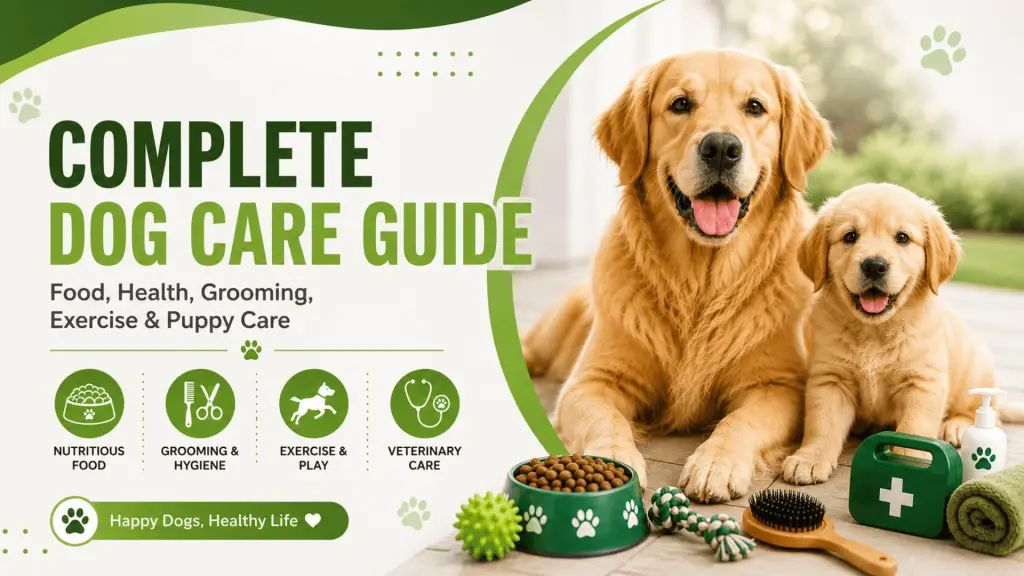
Taking care of a dog means providing more than food and shelter. A healthy dog-care routine includes appropriate nutrition, fresh water, exercise, mental stimulation, grooming, dental care, training, preventive veterinary care, and a safe home environment.
If you are a first-time dog parent, the most important thing to understand is that there is no single routine that works for every dog. A puppy, adult dog, senior dog, small breed, large breed, highly active dog, and dog with a health condition can all have different needs.
Pets Facts provides practical pet-care guides to help dog owners understand those differences and make better everyday care decisions.
This complete dog care guide covers the basics you need to know about feeding, puppy care, exercise, grooming, health, safety, sleep, daily routines, and common dog-care mistakes.
How Do You Take Care of a Dog?
To take care of a dog, provide a nutritionally appropriate diet, fresh water, regular age-appropriate exercise, mental stimulation, grooming, dental care, training, a safe living environment, and preventive veterinary care.
Puppies need additional attention to growth, nutrition, vaccination, socialization, potty training, chewing, and safety. The right routine depends on your dog’s age, breed, size, lifestyle, activity level, and health.
What Does a Dog Need Every Day?
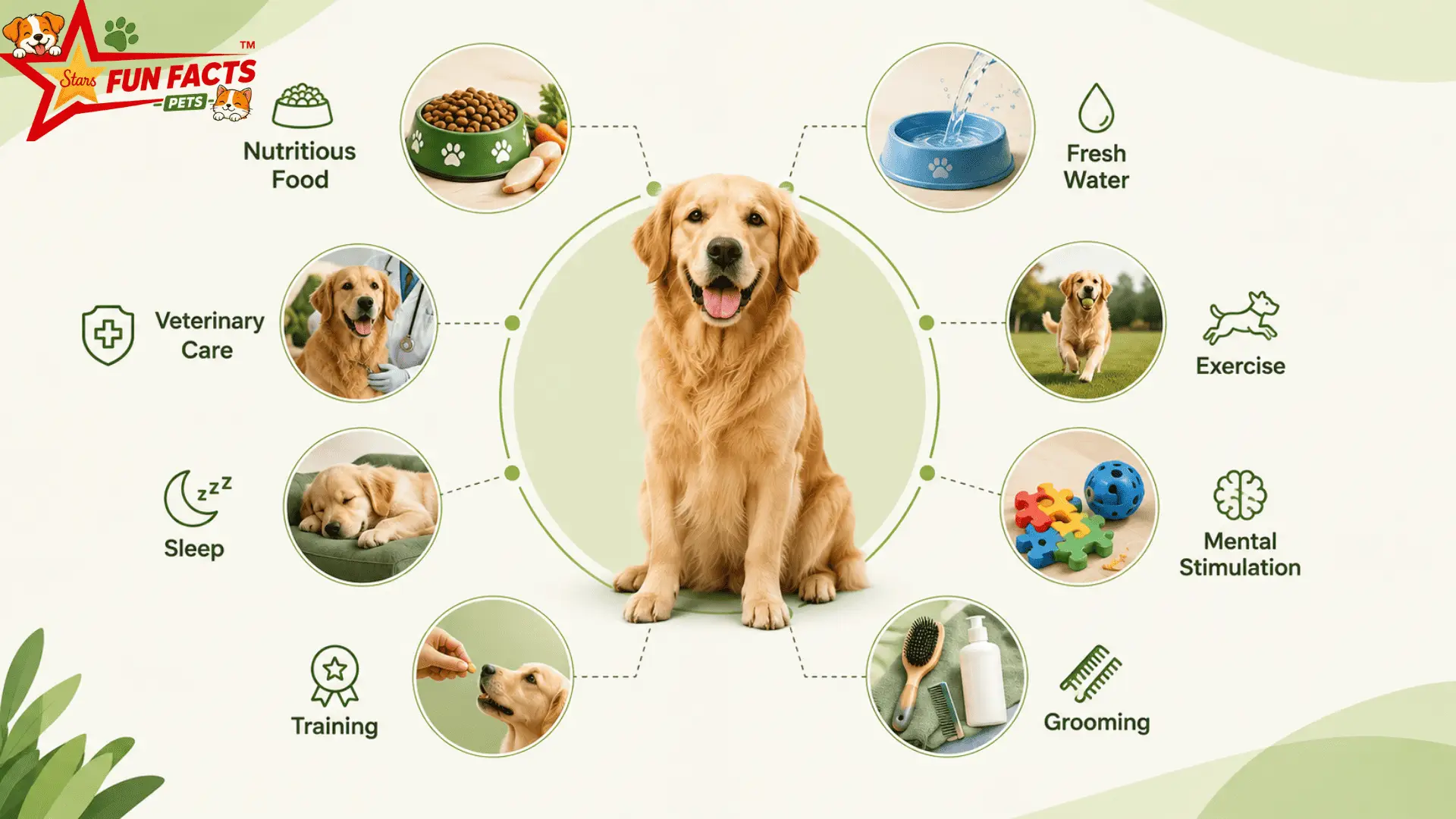
A dog’s everyday needs can be grouped into several basic areas:
| Daily need | Why it matters |
| Appropriate food | Provides nutrients and energy |
| Fresh water | Supports normal hydration |
| Exercise | Supports fitness and mobility |
| Mental stimulation | Provides enrichment and helps prevent boredom |
| Bathroom opportunities | Supports normal elimination |
| Social interaction | Supports bonding and behavior |
| Training | Builds communication and good habits |
| Rest and sleep | Allows recovery |
| Safe environment | Reduces preventable hazards |
| Health observation | Helps you notice changes early |
The exact amount of each will vary.
For example, a young puppy may need several opportunities to go to the bathroom and periods of rest throughout the day. At the same time, a healthy adult dog may have a more predictable routine. A senior dog may need shorter activities and closer monitoring of mobility.
AAHA’s canine life-stage guidance emphasizes that preventive care should be individualized according to factors such as age, size, breed, lifestyle, and health status.
A useful way to think about responsible dog care is:
Nutrition + hydration + movement + enrichment + hygiene + preventive healthcare + safety + observation.
Dog Food and Nutrition
Nutrition is one of the foundations of good dog care.
A dog’s food should provide appropriate nutrients while fitting the dog’s life stage, body condition, activity level, and health needs.
The WSAVA Global Nutrition Guidelines recommend looking beyond marketing language and ingredient lists when evaluating pet food. Nutrition should be considered as part of an individualized plan for the animal.
What Should a Dog Eat?
A dog’s primary diet should be nutritionally appropriate for its life stage and individual requirements.
When choosing a dog food, consider:
- Age and life stage
- Expected adult size
- Activity level
- Body condition
- Existing health conditions
- Feeding instructions
- Nutritional adequacy
- Food safety and storage
- Veterinary recommendations
Do not choose food solely because the packaging says it is “premium,” “natural,” or contains a particular ingredient.
The ingredient list can provide useful information, but it should not be treated as the only measure of nutritional quality.
Puppy, Adult, and Senior Dog Nutrition
A dog’s nutritional needs can change throughout life.
| Life stage | Main consideration |
| Puppy | Growth and development |
| Young adult | Transition and maintenance |
| Adult | Healthy body condition and maintenance |
| Senior | Individual health, activity, and body condition |
| Pregnant or nursing | Increased nutritional requirements |

Puppies need nutrition designed for growth. Large and giant breed puppies can require particularly careful nutritional management.
Adult dogs generally need a diet that supports maintenance and healthy body condition. Senior dogs may experience changes in activity, metabolism, dental health, or medical needs, so their nutritional plan may need adjustment.
AAHA’s life-stage framework specifically recommends adapting care as dogs move through different stages of life.
How Often Should You Feed a Dog?
There is no single feeding schedule that is correct for every dog.
Feeding frequency can depend on:
- Age
- Size
- Food type
- Health
- Activity
- Individual routine
Puppies generally require more frequent meals than adult dogs.
Instead of focusing only on how many times a dog eats, also monitor:
- Body condition
- Weight trend
- Appetite
- Stool quality
- Energy
- Growth in puppies
Portion Control and Treats
Overfeeding can contribute to unhealthy weight gain.
Treats, chews, table scraps, and other extras should be considered part of the dog’s overall calorie intake.
A useful principle is:
A treat is still part of the diet, even when it is not served in the food bowl.
Do not increase food portions simply because your dog appears hungry. Body condition and weight trends provide more useful information than begging behavior alone.
Fresh Water for Dogs
Fresh, clean water should generally be available throughout the day.
Water requirements vary depending on:
- Body size
- Diet
- Weather
- Exercise
- Activity
- Health
- Medications
A noticeable and persistent change in drinking behavior deserves attention, especially when it occurs alongside changes in appetite, urination, energy, or weight.
Can Dogs Eat Human Food?
Some human foods can be suitable for dogs in appropriate amounts, while others can be dangerous.
Never assume that something is safe for dogs simply because humans eat it.
Potentially dangerous foods and ingredients include:
- Chocolate
- Grapes and raisins
- Onions and garlic
- Macadamia nuts
- Xylitol
- Alcohol
- Caffeinated products
The FDA specifically warns that xylitol can cause serious poisoning in dogs.
If you believe your dog has eaten something potentially toxic, contact a veterinarian promptly rather than attempting to diagnose the situation at home.
Puppy Care: What Is Different?
Puppies require more than simply smaller portions of adult dog care.
Their first months involve rapid physical development, learning, socialization, vaccination, training, and environmental exploration.
Important puppy-care priorities include:
- Appropriate growth nutrition
- Veterinary examinations
- Vaccination
- Parasite prevention
- Safe socialization
- Potty training
- Basic obedience training
- Safe exercise
- Chewing and teething management
- Puppy-proofing the home
AAHA’s life-stage resources identify nutrition, vaccination, behavior, socialization, parasite control, safety, and dental care as important components of puppy care.
What Should You Feed a Puppy?
Puppies need food formulated to support growth rather than simply an adult maintenance diet.
The appropriate feeding plan depends on:
- Age
- Breed
- Expected adult size
- Growth rate
- Body condition
- Food formulation
- Health
Large and giant breed puppies may require especially careful nutritional management.
Puppy Vaccinations
Puppy vaccination should follow a veterinarian-designed schedule based on age, previous vaccination, local disease risk, lifestyle, and applicable vaccine recommendations.
The WSAVA 2024 Vaccination Guidelines provide current global guidance on vaccination and distinguish between core and non-core vaccines.
Vaccination is not completely one-size-fits-all. Your veterinarian can determine which vaccines are appropriate and when they should be given.
Puppy Socialization
Socialization means helping a puppy develop positive experiences with people, environments, handling, sounds, and appropriate interactions.
Good socialization should be:
- Positive
- Gradual
- Controlled
- Age-appropriate
- Free from overwhelming experiences
Socialization does not mean forcing a puppy into unfamiliar situations. Because puppies can also be vulnerable to infectious diseases, discuss safe socialization opportunities with your veterinarian while the vaccination series is being completed.

Puppy Potty Training
Successful potty training depends heavily on consistency.
A useful routine includes:
- Frequent bathroom opportunities
- Supervision
- A predictable schedule
- Immediate positive reinforcement
- A consistent sleeping area
- Cleaning accidents properly
Accidents are normal during learning. Punishing a puppy after an accident is unlikely to teach the desired behavior and can create fear or confusion.
Puppy Chewing and Teething
Chewing is normal puppy behavior. Provide safe, age-appropriate chew options and keep dangerous objects away from the puppy.
Avoid extremely hard objects that could damage teeth. AAHA recommends discussing safe dental products and avoiding hard toys, bones, and chews that may cause dental injury.
Dog Exercise and Mental Stimulation
Dogs need appropriate physical activity, but there is no universal exercise prescription that works for every dog.
Exercise needs can vary with:
- Breed
- Age
- Size
- Health
- Fitness
- Temperament
- Energy level
- Lifestyle
- Weather
AAHA’s canine life-stage framework recommends considering age, breed, temperament, lifestyle, and health when planning exercise and enrichment.
Why Do Dogs Need Exercise?
Appropriate activity can support:
- Healthy body condition
- Muscle fitness
- Mobility
- Physical conditioning
- Mental wellbeing
- Normal behavior
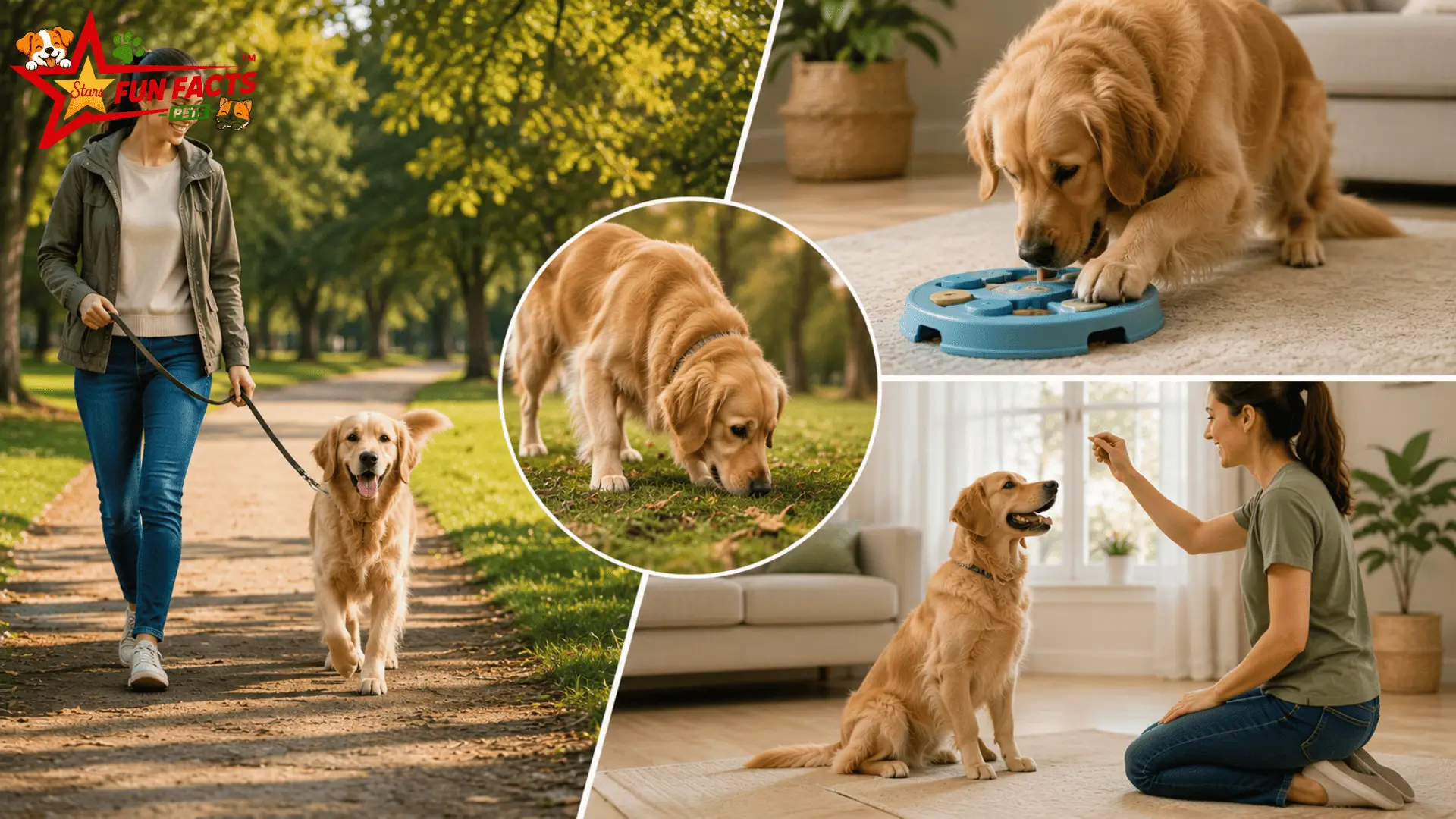
Exercise does not have to mean a long walk every day. Depending on the dog, activities can include:
- Walking
- Controlled play
- Fetch
- Swimming
- Scent games
- Training
- Food puzzles
- Exploration
How Much Exercise Does a Puppy Need?
Puppies need movement and play, but their activities should be appropriate for their development. Do not automatically apply an adult dog’s exercise routine to a growing puppy.
A puppy’s day should include a balance of:
- Short activity
- Exploration
- Training
- Play
- Mental enrichment
- Rest
Large and giant breed puppies may require additional consideration because their bodies are still developing.
Exercise for Adult Dogs
Healthy adult dogs can have widely different exercise requirements. A high-energy working or sporting breed may need substantially more activity and enrichment than a low-energy companion dog.
The goal is not simply to make a dog tired. The goal is to provide an appropriate combination of movement and enrichment.
Exercise for Senior Dogs
Older dogs may need lower-impact activities rather than complete inactivity.
Depending on health and mobility, options may include:
- Shorter walks
- Gentle movement
- Sniffing
- Controlled play
- Puzzle feeders
- Short training sessions
- Indoor enrichment
AAHA recommends adapting exercise and the environment as dogs experience age-related changes.
Mental Stimulation for Dogs
Physical exercise is only one part of enrichment.
Mental activities can include:
- Scent games
- Puzzle feeders
- Short training sessions
- Food-search games
- Interactive toys
- Learning new behaviors
- Exploring safe new environments
A dog can be physically tired and still be mentally under-stimulated.
Dog Grooming: A Complete Basic Routine
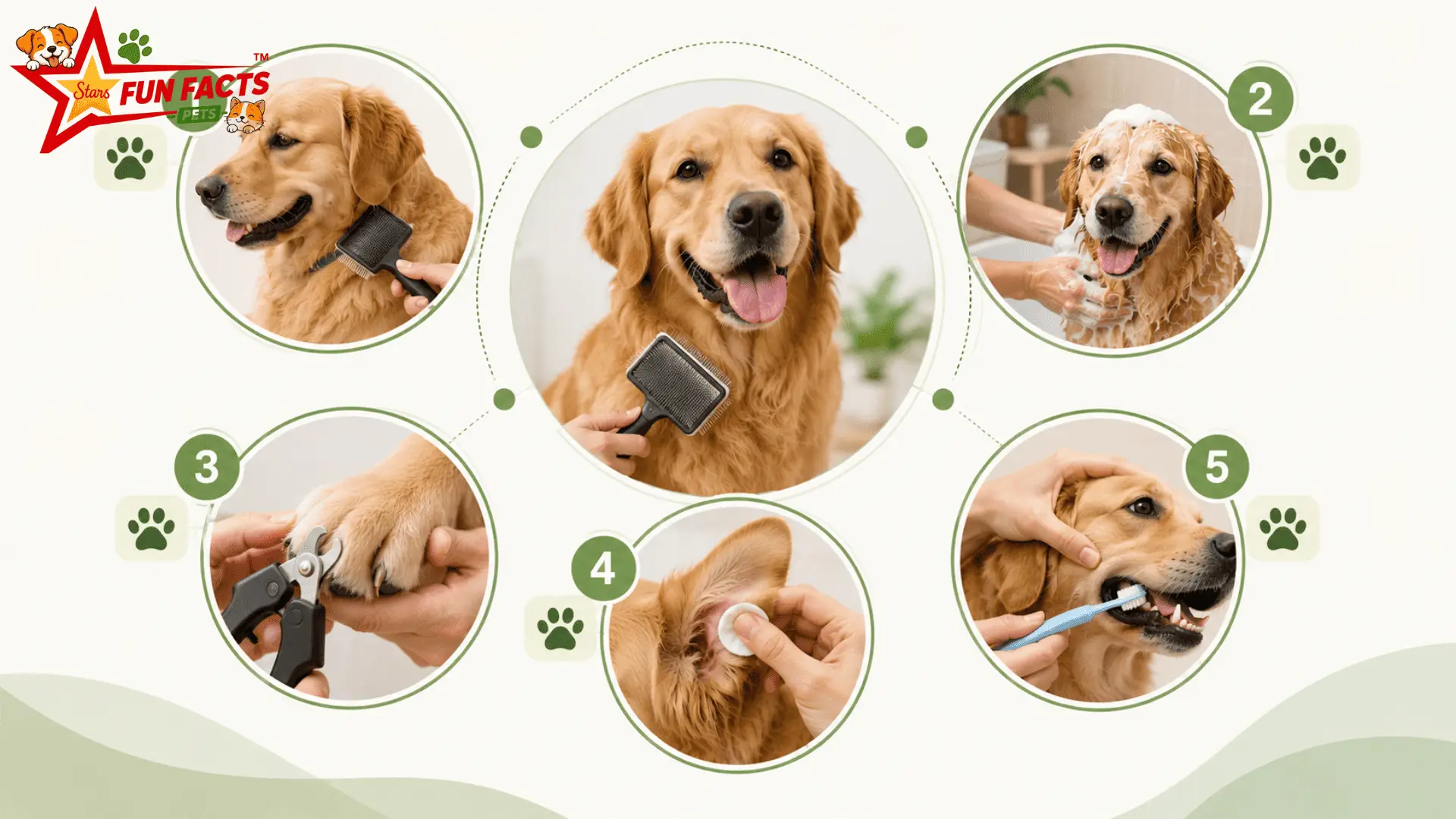
Grooming helps maintain the coat and allows owners to notice changes in the skin, ears, nails, and mouth.
The correct grooming frequency depends on the individual dog.
Coat type, breed, lifestyle, skin condition, and outdoor activity can all affect grooming requirements.
Brushing
Regular brushing can help:
- Remove loose hair
- Reduce tangles
- Prevent or identify mats
- Maintain the coat
- Allow you to inspect the skin
Long, curly, or dense coats often require more frequent brushing than short coats.
How Often Should You Bathe a Dog?
There is no universal bathing schedule.
Bathing frequency depends on:
- Coat type
- Skin health
- Lifestyle
- Outdoor activity
- Dirt exposure
- Odor
- Veterinary recommendations
Use products formulated for dogs unless your veterinarian recommends something else.
Nail Care
Check your dog’s nails regularly. Long nails can affect comfort and movement. If you are unsure how to trim them safely, ask a veterinarian or professional groomer to demonstrate the correct technique.
Dog Ear Care
Not every dog requires routine ear cleaning at the same frequency. Some dogs are more susceptible to ear problems because of anatomy, allergies, skin conditions, or lifestyle. Do not insert objects deeply into the ear canal.
Seek veterinary advice if the ear is:
- Painful
- Very red
- Swollen
- Producing unusual discharge
- Strongly odorous
- Frequently itchy
Dog Dental Care
Dental care should be part of routine dog care rather than something owners consider only when bad breath appears.
AAHA recommends incorporating dental care into preventive healthcare and discussing home dental care during veterinary visits.
A home dental routine may include:
- Tooth brushing with dog-specific toothpaste
- Appropriate dental products
- Regular oral checks
- Veterinary dental examinations
Never use human toothpaste for your dog unless specifically directed by a veterinary professional.
Parasite Prevention
Dogs can be exposed to parasites such as:
- Fleas
- Ticks
- Heartworms
- Intestinal parasites
Risk varies with geography, lifestyle, environment, and exposure.
Rather than choosing a product solely because it is popular online, ask your veterinarian which preventive approach is appropriate for your dog.
Dog Health and Preventive Care
Preventive care is about maintaining health and identifying changes before they become larger problems.
A preventive-care plan may include:
- Physical examinations
- Vaccinations
- Parasite prevention
- Dental care
- Weight monitoring
- Nutrition assessment
- Behavior assessment
- Mobility assessment
- Breed-related screening
- Age-appropriate diagnostic testing
AAHA describes preventive care as an individualized process influenced by a dog’s life stage, size, breed, lifestyle, and health status.
How Often Should a Dog See a Veterinarian?
There is no single visit schedule appropriate for every dog. Puppies usually need several visits during early development and vaccination.
Healthy adult dogs need routine wellness care based on their individual circumstances. Senior dogs may need more frequent monitoring because age-related health changes become more likely.
AAHA’s 2025 guidance notes that healthy young adult dogs should generally receive at least annual wellness care, while some dogs may benefit from twice-yearly visits depending on breed, lifestyle, and health risks.
Your veterinarian should determine the appropriate schedule for your dog.
Maintaining a Healthy Weight
Weight management is an important part of long-term dog health. Do not judge your dog’s health only by the number displayed on a weighing scale.
Veterinary teams may consider:
- Body weight
- Body condition
- Muscle condition
- Diet
- Treat intake
- Activity
- Medical conditions
Regularly monitoring changes can help you identify a trend before it becomes a larger problem.
Common Signs That Your Dog May Be Sick
Dogs cannot tell us when something feels wrong, so owners need to notice changes from normal behavior.
Possible warning signs include:
- Loss of appetite
- Repeated vomiting
- Persistent diarrhea
- Unusual lethargy
- Difficulty breathing
- Sudden behavioral changes
- Excessive thirst
- Persistent itching
- Pain or limping
- Blood in vomit, stool, or urine
- Difficulty eating
- Sudden weakness
- Collapse
These symptoms do not identify a specific disease by themselves. For example, vomiting can have many possible causes. Determining the cause may require a veterinary examination and, depending on the situation, diagnostic testing.
When Does a Dog Need Urgent Veterinary Care?
Some situations should not be managed by waiting at home.
Seek urgent veterinary assistance for signs such as:
- Difficulty breathing
- Collapse
- Seizures
- Severe bleeding
- Severe weakness
- Suspected poisoning
- Serious trauma
- Severe difficulty walking
- Suspected heatstroke
- Sudden severe abdominal problems
If poisoning is suspected, contact a veterinarian promptly and provide information about what your dog may have consumed, how much, and when.
The FDA specifically identifies xylitol as a serious poisoning risk for dogs.
Dog Safety at Home
A healthy dog also needs a safe environment.
Potential household hazards include:
- Toxic foods
- Human medications
- Cleaning chemicals
- Toxic plants
- Electrical cords
- Small objects
- Open trash
- Unsafe chew items
- Hot surfaces
- Unsafe balconies
- Unsecured pools
- Dangerous outdoor areas
AAHA’s canine life-stage resources include household safety, toxins, medications, foreign objects, transportation, and temperature-related risks as important areas for owners to consider.
Keep Toxic Foods Away From Dogs
Important examples include:
- Chocolate
- Xylitol
- Grapes and raisins
- Onions and garlic
- Macadamia nuts
- Alcohol
- Caffeine
If you suspect your dog has consumed a toxic substance, contact a veterinarian rather than trying to treat the poisoning yourself.
Human Medicines Can Be Dangerous
Never give your dog human medication simply because the medication is commonly used by people. A medication that is safe for a human may be unsafe for a dog.
If accidental ingestion occurs, contact a veterinary professional and provide the medication name, strength, estimated amount, and time of exposure if known.
Dog Safety in Cars
Dogs should be appropriately restrained during vehicle travel. Depending on the dog and vehicle, options may include:
- A secured travel crate
- A properly fitted safety harness
- A suitable barrier
- Another appropriately secured travel system
Do not allow the dog to roam freely around the driver’s area. Never leave a dog unattended in a dangerously hot vehicle.
Dog Sleep and Rest
Sleep is a normal and important part of a dog’s daily routine. Puppies generally spend a large amount of time sleeping because their bodies and brains are developing. Older dogs may also rest more than young adults.
A good routine should provide:
- A comfortable sleeping area
- Quiet rest periods
- Regular activity
- Consistent feeding
- Mental stimulation
- Bathroom opportunities
- Family interaction
- Time away from excessive stimulation
The important distinction is between a dog’s normal sleeping pattern and a new or unusual increase in lethargy.
If your dog suddenly becomes much less active, especially with other symptoms, speak with a veterinarian.
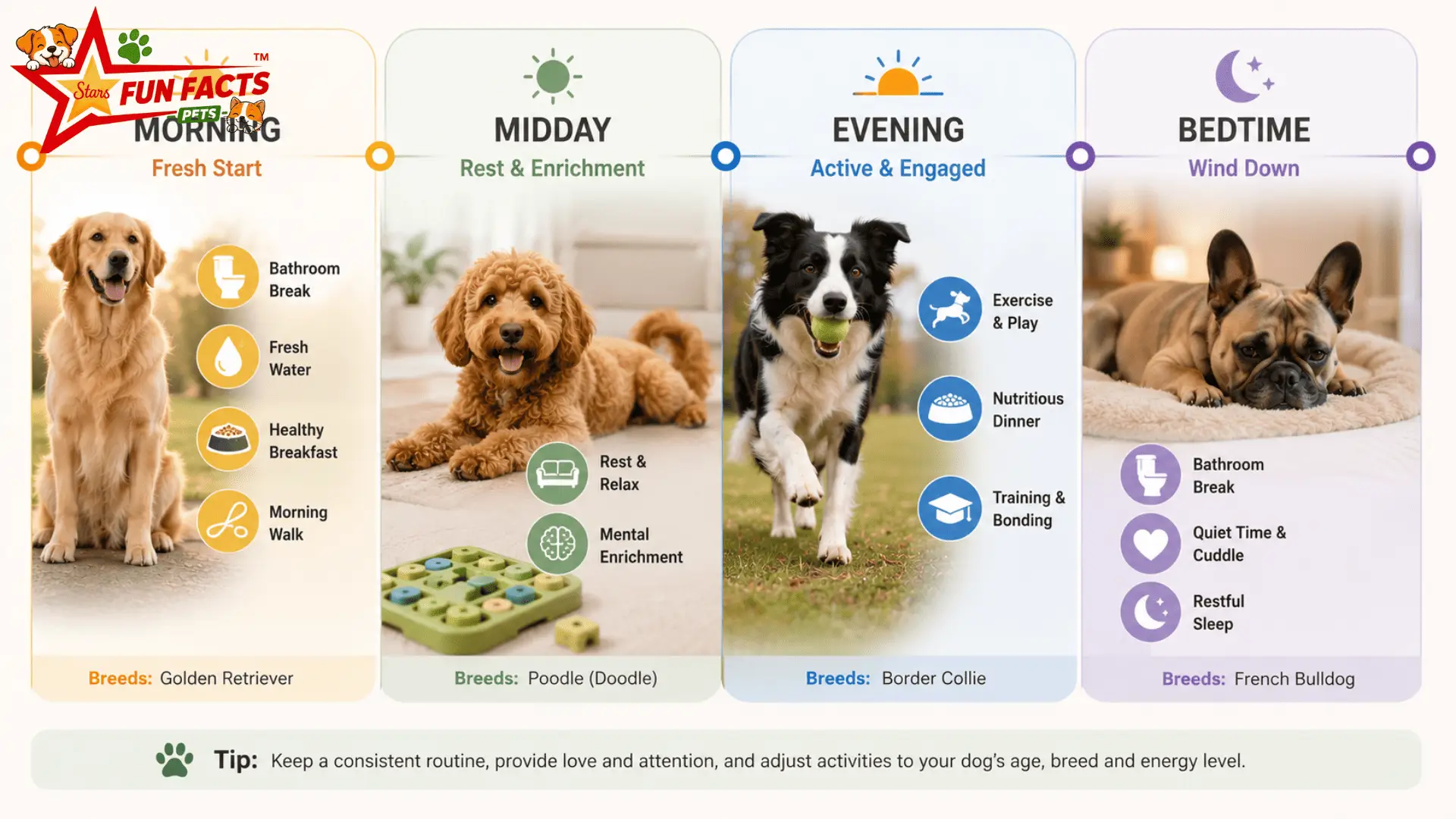
How to Build a Healthy Daily Routine for Your Dog
There is no perfect schedule for every dog. A simple example might look like this:
Morning
- Bathroom break
- Fresh water
- Breakfast
- Appropriate walk or activity
- Short training session
Midday
- Bathroom opportunity
- Rest
- Mental enrichment
- Short play session if appropriate
Evening
- Walk or other suitable exercise
- Dinner
- Training or enrichment
- Family interaction
Before Bed
- Final bathroom opportunity
- Fresh water
- Quiet time
- Comfortable sleeping area
This schedule should be adapted to the individual dog. A puppy may need more frequent meals, bathroom breaks, naps, and supervision.
A senior dog with mobility problems may benefit from shorter, gentler activities. A high-energy adult dog may need more physical and mental enrichment.
Puppy vs Adult vs Senior Dog Care
One of the most important principles of responsible dog care is recognizing that age changes needs.
| Care area | Puppy | Adult | Senior |
| Nutrition | Growth-focused | Maintenance | Individualized to health and condition |
| Meals | Usually more frequent | Consistent routine | Individualized |
| Exercise | Developmentally appropriate | Based on fitness and energy | Often lower-impact |
| Training | Socialization and foundation | Reinforcement and new skills | Continued enrichment |
| Veterinary care | Frequent early visits | Routine preventive care | Often closer monitoring |
| Dental care | Establish good habits | Maintain routine | Monitor closely |
| Safety | Puppy-proof environment | Lifestyle-specific | Consider mobility and sensory changes |
| Enrichment | Exploration and learning | Training and play | Gentle cognitive enrichment |
AAHA’s life-stage framework emphasizes that preventive care should evolve as a dog matures rather than remaining identical throughout life.
Common Dog Care Mistakes to Avoid
Even caring owners can make mistakes.
1. Overfeeding
Giving extra food whenever a dog begs can gradually increase calorie intake. Monitor body condition rather than relying only on appetite.
2. Too Many Treats
Treats, chews, table scraps, and snacks can add calories quickly. Include them when considering your dog’s overall diet.
3. Ignoring Dental Care
Bad breath should not automatically be considered normal. Dental care should be part of routine preventive healthcare.
4. Using the Same Exercise Routine for Every Dog
A puppy, senior dog, small companion breed, and athletic working dog can have very different needs.
5. Giving Human Medication
Never assume a human medicine is safe for a dog.
6. Ignoring Persistent Symptoms
A persistent change in appetite, drinking, behavior, mobility, or digestion deserves attention.
7. Skipping Parasite Prevention
Parasite exposure depends on the dog’s location and lifestyle, but preventive care should be discussed with a veterinarian.
8. Giving Unsafe Human Foods
Some foods that are harmless to people can be dangerous for dogs.
9. Ignoring Mental Stimulation
A dog needs more than physical exercise. Training, scent games, exploration, and food puzzles can provide valuable enrichment.
Dog Care Checklist
Use this checklist as a practical starting point. Your dog’s actual schedule may differ.
| Care area | Daily | Weekly* | Periodic |
| Appropriate food | ✓ | ||
| Fresh water | ✓ | ||
| Exercise | ✓ | ||
| Mental stimulation | ✓ | ||
| Bathroom opportunities | ✓ | ||
| Social interaction | ✓ | ||
| Training | ✓ | ||
| Brushing | ✓* | ||
| Dental care | ✓ | ||
| Bathing | As needed | ||
| Nail care | As needed | ||
| Ear care | As appropriate | ||
| Body condition monitoring | ✓* | ||
| Veterinary examination | As recommended | ||
| Vaccinations | As recommended | ||
| Parasite prevention | Veterinary plan | ||
| Professional dental care | As recommended |
* Frequency varies according to the individual dog.
A long-coated dog may require brushing much more frequently than once a week. Another dog may need considerably less.
Frequently Asked Questions About Dog Care
How do I take care of a dog?
Provide appropriate nutrition, fresh water, exercise, mental stimulation, grooming, dental care, training, safety, and preventive veterinary care. Adjust the routine according to the dog’s age, breed, size, lifestyle, and health.
What does a dog need every day?
Most dogs need food, fresh water, bathroom opportunities, suitable physical activity, mental enrichment, social interaction, training or engagement, and adequate rest.
How often should I feed my dog?
It depends on the dog’s age, size, health, food, and lifestyle. Puppies generally need more frequent meals than adult dogs.
How much exercise does a dog need?
There is no universal exercise requirement. Age, breed, health, fitness, temperament, and lifestyle all influence how much activity is appropriate.
How often should I bathe my dog?
It depends on coat type, skin health, lifestyle, outdoor activity, and veterinary recommendations. Some dogs need more frequent bathing than others.
How much water should a dog drink?
Water needs vary with body size, food, weather, activity, and health. Fresh water should generally be available throughout the day. A persistent change in drinking should be discussed with a veterinarian.
How do I know if my dog is healthy?
Normal appetite, energy, mobility, behavior, digestion, coat condition, and drinking habits can provide useful clues. Regular veterinary examinations are also important because some problems may not be obvious at home.
What foods are toxic to dogs?
Examples include chocolate, xylitol-containing products, grapes and raisins, onions and garlic, macadamia nuts, alcohol, and caffeine. If your dog may have eaten a toxic substance, contact a veterinarian promptly.
How often should a dog see a veterinarian?
The appropriate schedule depends on age, breed, lifestyle, health, and risk factors. Puppies usually need more frequent visits during early development, while some senior dogs may benefit from more frequent monitoring.
What is different about caring for a puppy?
Puppies need additional attention to growth, nutrition, vaccination, socialization, potty training, chewing, safe exercise, parasite prevention, and puppy-proofing.
Can home care replace veterinary care?
No. Daily home care is essential, but it cannot replace professional veterinary examinations, diagnosis, preventive healthcare, or treatment when a dog becomes ill.
Final Dog Care Takeaway
Good dog care is not about following one perfect routine. It is about creating a routine that fits the dog in front of you.
Feed according to the dog’s needs. Provide appropriate exercise and mental stimulation. Maintain grooming and dental care. Keep the environment safe. Watch for changes. Keep preventive veterinary care up to date.
The better question is not:
“What is the perfect dog-care routine?”
It is:
“What routine is appropriate for my dog’s age, size, breed, lifestyle, environment, and health?”
That is the foundation of responsible dog care. For more practical pet-care information, visit Pets Facts and explore the site’s dog-care resources.