
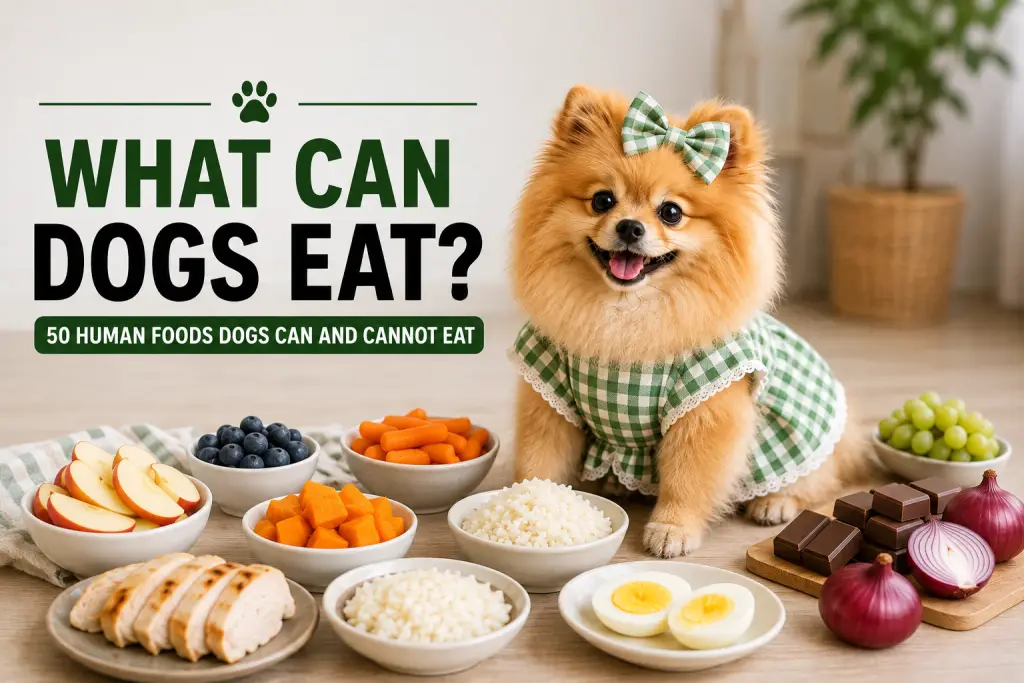
What can dogs eat? Many everyday human foods can be safely shared with dogs as occasional treats, but some foods can cause digestive problems or serious toxicity. Safe options include certain fruits, vegetables, cooked meats, eggs, and grains, while foods such as chocolate, grapes, raisins, xylitol, onions, garlic, and macadamia nuts should be kept away from dogs.
The most important rule is simple: human food should be an occasional addition, not a replacement for a complete and balanced dog diet.
For a broader overview of feeding, health, grooming, exercise, puppy care, and everyday routines, see our complete dog care guide.
This guide covers 50 common human foods, including what dogs can eat, what they should avoid, how each food should be prepared, and what to do if your dog eats something potentially dangerous.
Quick Answer: What Human Foods Can Dogs Eat?
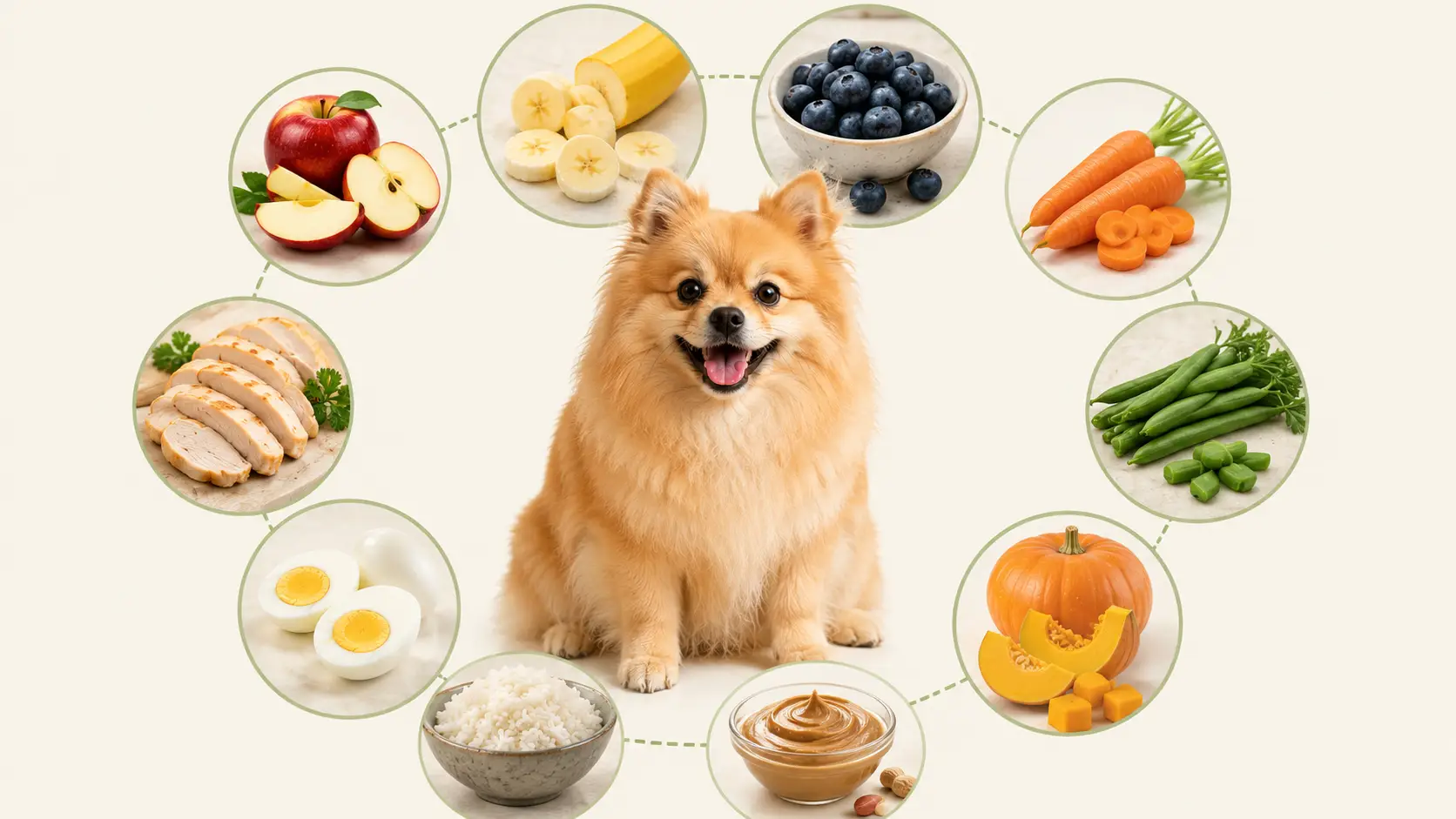
Dogs can eat some human foods in small, plain portions, including apples without seeds or cores, bananas, blueberries, carrots, green beans, pumpkin, cooked rice, cooked eggs, plain cooked chicken, cooked turkey, and xylitol-free peanut butter.
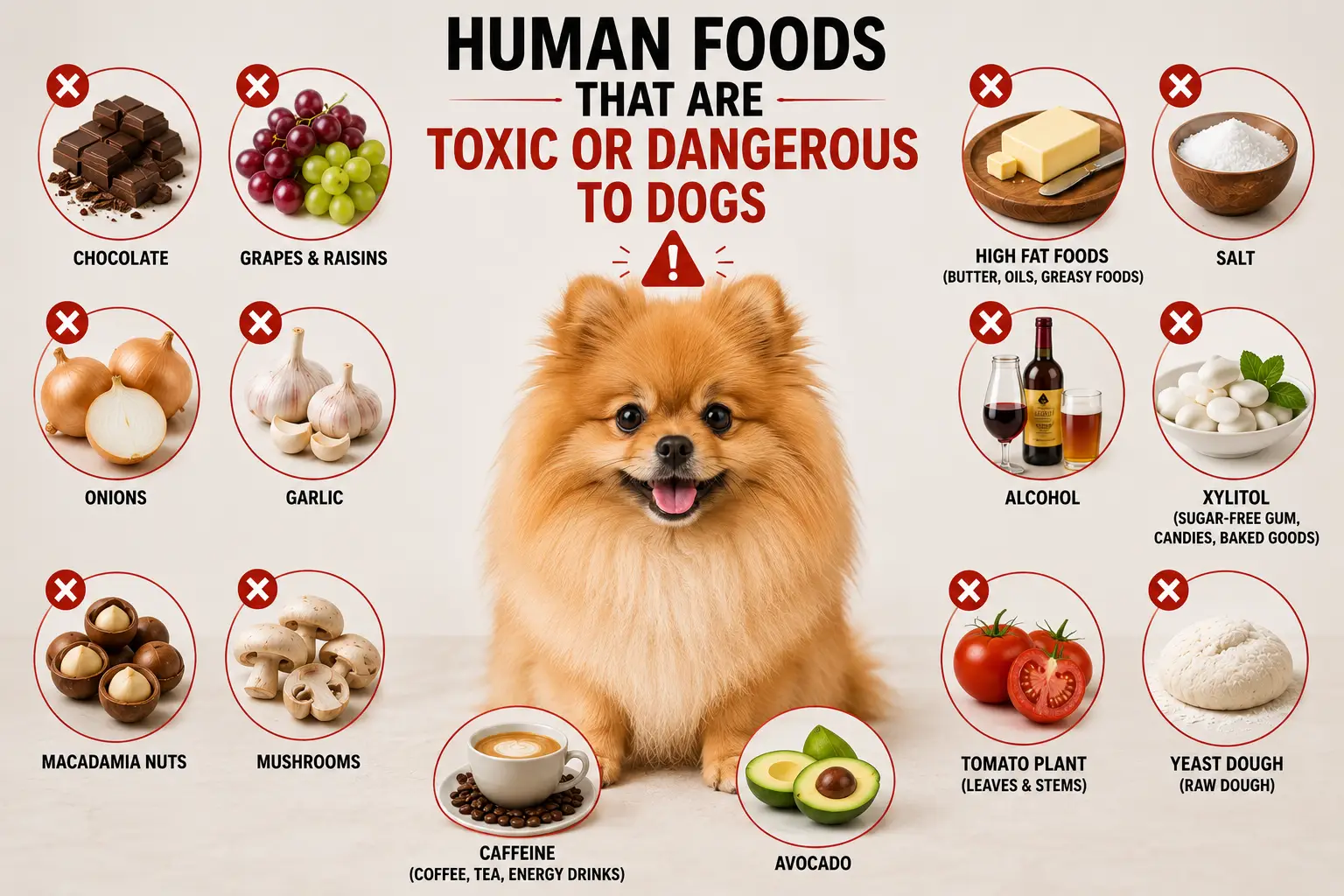
Dogs should not be given foods such as chocolate, grapes, raisins, xylitol, onions, garlic, macadamia nuts, alcohol, or caffeine.
Preparation matters too. Foods intended for dogs should generally be plain, without added salt, sauces, spices, excessive fat, or ingredients such as onions and garlic.
If your dog eats a potentially toxic food, contact a veterinarian promptly rather than waiting for symptoms.
50 Human Foods Dogs Can and Cannot Eat
The table below gives a quick overview, but individual dogs can react differently to foods. Portion size and preparation also matter.
| Human food | Can dogs eat it? | Important note | |
| 1 | Apples | Yes | Remove seeds and core; serve in small pieces |
| 2 | Bananas | Yes | High in natural sugar, so keep portions small |
| 3 | Blueberries | Yes | Good occasional treat in moderation |
| 4 | Strawberries | Yes | Wash and remove stems |
| 5 | Watermelon | Yes | Remove seeds and rind |
| 6 | Cantaloupe | Yes | Remove rind and seeds; give small portions |
| 7 | Mango | Yes | Remove the pit and skin; high in sugar |
| 8 | Pineapple | Yes | Fresh, plain pieces in moderation |
| 9 | Carrots | Yes | Raw or cooked; cut appropriately |
| 10 | Green beans | Yes | Plain and preferably without added salt |
| 11 | Peas | Yes | Plain peas are generally suitable in moderation |
| 12 | Pumpkin | Yes | Plain cooked pumpkin can be an occasional food |
| 13 | Sweet potato | Yes | Cooked and plain, without butter or seasoning |
| 14 | Broccoli | Small amounts | Can cause stomach upset in some dogs |
| 15 | Celery | Yes | Cut into manageable pieces |
| 16 | Cucumber | Yes | Plain and cut into bite-sized pieces |
| 17 | Corn | Yes | Kernels only, never the cob |
| 18 | Lettuce | Yes | Plain and in moderation |
| 19 | Cooked rice | Yes | Plain, cooked rice can be given in moderation |
| 20 | Oatmeal | Yes | Plain and cooked; avoid added sugar |
| 21 | Quinoa | Yes | Cooked and plain in moderate portions |
| 22 | Cooked eggs | Yes | Fully cooked and served plain |
| 23 | Cooked chicken | Yes | Plain, cooked, boneless meat |
| 24 | Cooked turkey | Yes | Remove bones, skin, excess fat and seasoning |
| 25 | Cooked salmon | Yes | Fully cooked and free of bones |
| 26 | Cooked shrimp | Yes | Fully cooked and shell removed |
| 27 | Plain yogurt | Depends | Some dogs have difficulty digesting dairy |
| 28 | Cheese | Small amounts | High fat and dairy may cause problems |
| 29 | Peanut butter | Check label | Must be free of xylitol |
| 30 | Plain popcorn | Small amounts | Air-popped, without butter or excessive salt |
| 31 | Chocolate | No | Can be toxic to dogs |
| 32 | Grapes | No | Can cause serious kidney injury |
| 33 | Raisins | No | Can cause serious kidney injury |
| 34 | Xylitol | No | Can cause life-threatening poisoning |
| 35 | Onions | No | Can damage red blood cells |
| 36 | Garlic | No | Can damage red blood cells |
| 37 | Chives | No | Part of the Allium family |
| 38 | Leeks | No | Part of the Allium family |
| 39 | Macadamia nuts | No | Toxic to dogs |
| 40 | Alcohol | No | Can cause alcohol poisoning |
| 41 | Coffee | No | Caffeine can be dangerous |
| 42 | Caffeinated energy drinks | No | High caffeine content can be dangerous |
| 43 | Raw yeast dough | No | Can expand in the stomach and produce alcohol |
| 44 | Avocado | Best avoided | Fat, pit and plant components create safety concerns |
| 45 | Cherries | Best avoided | Pits and plant parts can create serious risks |
| 46 | Raw meat | Avoid | Can carry harmful bacteria and contamination risks |
| 47 | Raw eggs | Avoid | Bacterial and nutritional concerns |
| 48 | Cooked bones | No | Can splinter and cause injury or obstruction |
| 49 | Very salty foods | Avoid | Excessive salt can cause illness |
| 50 | Bacon and very fatty foods | Avoid | High fat and salt can cause digestive problems |
The distinction between “can eat” and “should eat regularly” is important. Even foods that are generally safe should normally remain occasional treats rather than becoming a major part of a dog’s diet.
Human Foods Dogs Can Eat
1. Can Dogs Eat Apples?
Yes, dogs can eat apples in moderation.
Remove the seeds and core before giving an apple to your dog, then cut the fruit into appropriately sized pieces.
Apples can be used as an occasional treat, but they should not replace a balanced dog food.
Safe preparation: Wash, remove the core and seeds, and cut into small pieces.
2. Can Dogs Eat Bananas?
Yes, dogs can eat bananas in small amounts.
Bananas contain natural sugar, so large portions can add unnecessary calories.
A few small pieces can work as an occasional treat for many healthy dogs.
Safe preparation: Peel and cut into small pieces.
3. Can Dogs Eat Blueberries?
Yes, blueberries are generally safe for dogs in moderation.
They can be given fresh or appropriately prepared as an occasional treat.
As with other treats, start with a small amount and watch how your dog responds.
Safe preparation: Wash thoroughly and serve a small portion.
4. Can Dogs Eat Strawberries?
Yes, dogs can eat strawberries in moderation.
Wash them, remove the leafy tops, and cut large strawberries into manageable pieces.
Because strawberries contain natural sugar, portion size still matters.
5. Can Dogs Eat Watermelon?
Yes, dogs can eat watermelon if the seeds and rind are removed.
The edible flesh can be given as an occasional treat.
Avoid giving the rind because it can be difficult to digest.
6. Can Dogs Eat Cantaloupe?
Yes, dogs can eat small amounts of plain cantaloupe.
Remove the rind and seeds before serving.
Cantaloupe is relatively sweet, so it is best treated as an occasional snack rather than a daily food.
7. Can Dogs Eat Mango?
Yes, dogs can eat mango flesh in moderation.
The pit must be removed because it can create a choking or intestinal obstruction risk.
Remove the skin if it is difficult for your dog to digest and serve small pieces.
8. Can Dogs Eat Pineapple?
Yes, small amounts of plain pineapple can be given to many dogs.
Remove the tough outer skin and central core.
Fresh pineapple is preferable to products containing added sugar or syrup.
9. Can Dogs Eat Carrots?
Yes, carrots are generally safe for dogs.
They can be served raw or cooked, depending on what your dog tolerates.
Large pieces should be cut appropriately to reduce choking risk.
Carrots can be a useful lower-calorie treat for some dogs.
10. Can Dogs Eat Green Beans?
Yes, plain green beans are generally safe for dogs.
They are best served without butter, sauces, or excessive salt.
Avoid seasoned green beans prepared with onions, garlic, or other potentially harmful ingredients.
11. Can Dogs Eat Peas?
Yes, plain peas can generally be given to dogs in moderation.
Fresh or appropriately prepared peas are preferable to heavily salted or seasoned versions.
12. Can Dogs Eat Pumpkin?
Yes, plain pumpkin can be suitable for dogs.
The important distinction is between plain pumpkin and sweetened pumpkin products.
Avoid pumpkin preparations containing added sugar, spices, or other ingredients that may be unsuitable for dogs.
13. Can Dogs Eat Sweet Potatoes?
Yes, cooked plain sweet potato can be given in moderation.
Do not add butter, sugar, salt, sauces, or seasoning.
Cooked sweet potato should be treated as an occasional addition rather than a replacement for a complete diet.
14. Can Dogs Eat Broccoli?
Yes, but only in small amounts.
Broccoli can cause digestive upset in some dogs, particularly when eaten in large quantities.
The pieces should be appropriately sized and served plain.
15. Can Dogs Eat Celery?
Yes, dogs can eat plain celery in moderation.
Cut it into manageable pieces before serving.
Because celery is fibrous, some dogs may tolerate it better when chopped or lightly cooked.
16. Can Dogs Eat Cucumber?
Yes, plain cucumber can be an occasional treat for dogs.
Wash it and cut it into appropriately sized pieces.
Avoid pickled cucumber because pickles can contain large amounts of salt, spices, garlic, or onion.
17. Can Dogs Eat Corn?
Yes, dogs can eat plain corn kernels.
The important part is to remove the cob.
Corn cobs can create a serious gastrointestinal obstruction if swallowed.
Safe preparation: Plain kernels only, without butter, salt, or seasoning.
18. Can Dogs Eat Lettuce?
Yes, plain lettuce can generally be given in small amounts.
Wash it thoroughly and cut it into manageable pieces.
Avoid lettuce salads containing onions, garlic, rich dressings, or other unsafe ingredients.
19. Can Dogs Eat Cooked Rice?
Yes, plain cooked rice can be eaten by dogs in appropriate portions.
Rice can be part of an occasional meal addition for some dogs.
However, rice should not be used as a complete diet by itself.
Safe preparation: Fully cooked and plain, without onion, garlic, butter, sauces, or excessive salt.
20. Can Dogs Eat Oatmeal?
Yes, plain cooked oatmeal can be given in moderation.
Avoid oatmeal containing:
- Raisins
- Chocolate
- Xylitol
- Excessive sugar
- Artificial sweeteners
Let it cool before serving.
21. Can Dogs Eat Quinoa?
Yes, plain cooked quinoa can generally be given in moderation.
Serve it without sauces, salt, garlic, onions, or other seasonings.
It should remain an occasional addition rather than the main diet.
22. Can Dogs Eat Eggs?
Yes, dogs can eat fully cooked eggs.
Eggs can provide protein and may be used as an occasional treat for many dogs.
Avoid raw eggs because raw animal products can carry bacterial risks.
Safe preparation: Fully cooked, plain, and cooled.
23. Can Dogs Eat Chicken?
Yes, plain cooked chicken can be given to dogs.
Remove:
- Bones
- Excess skin
- Excess fat
- Seasoning
- Onion
- Garlic
- Sauces
Chicken should be fully cooked.
Never give dogs cooked chicken bones because they can splinter and cause serious injuries or gastrointestinal obstruction.
24. Can Dogs Eat Turkey?
Yes, plain cooked turkey can be suitable for dogs.
Use lean meat and remove bones, excess skin, fat, and seasoning.
Turkey prepared with onion, garlic, heavy sauces, or excessive salt should not be shared with dogs.
25. Can Dogs Eat Salmon?
Yes, fully cooked salmon can be given in moderation.
Make sure all bones are removed and avoid salmon prepared with sauces, garlic, onions, excessive salt, or spices.
Raw or undercooked fish can carry pathogens or parasites, so fully cooked fish is the safer choice.
26. Can Dogs Eat Shrimp?
Yes, dogs can eat fully cooked shrimp in small amounts.
Remove:
- Shell
- Tail
- Head
- Digestive tract where appropriate
Serve plain and fully cooked.
27. Can Dogs Eat Yogurt?
Some dogs can eat plain yogurt, but not every dog tolerates dairy well.
Dogs that are sensitive to lactose or dairy may develop:
- Gas
- Loose stool
- Diarrhea
- Stomach discomfort
Choose plain yogurt without added sugar or artificial sweeteners.
Most importantly, check the ingredient label for xylitol.
28. Can Dogs Eat Cheese?
Some dogs can eat small amounts of cheese.
However, cheese can be high in fat, and some dogs have difficulty digesting dairy.
Use small portions and choose a plain variety without:
- Garlic
- Onion
- Chives
- Spices
- Excessive salt
Cheese should be an occasional treat, not a major part of the diet.
29. Can Dogs Eat Peanut Butter?
Dogs can eat some peanut butter, but you must check the label first.
The biggest concern is xylitol.
Xylitol can be found in some sugar-free foods, candies, dental products, and nut butters.
Choose peanut butter without:
- Xylitol
- Excessive salt
- Added chocolate
- Other potentially harmful ingredients
Give only a small amount.
30. Can Dogs Eat Popcorn?
Plain, air-popped popcorn can be given to dogs in small amounts.
Avoid:
- Butter
- Heavy salt
- Caramel
- Chocolate coatings
- Seasoning powders
Make sure the kernels are fully popped.
Human Foods Dogs Should Not Eat
Some foods should be completely avoided because they can cause poisoning or serious health problems. For a broader reference list of potentially dangerous human foods, see the ASPCA’s guide to people foods to avoid feeding pets.
31. Can Dogs Eat Chocolate?
No. Dogs should not eat chocolate.
Chocolate contains methylxanthines, including theobromine and caffeine, which dogs process differently from humans.
The risk depends on the type and amount of chocolate and the dog’s size.
Dark chocolate and cocoa products can be particularly concerning because they can contain higher concentrations of toxic compounds.
If your dog eats chocolate, contact a veterinarian promptly.
32. Can Dogs Eat Grapes?
No. Grapes should not be given to dogs.
Grapes can cause serious illness, including potentially severe kidney injury.
Do not assume that a small grape is automatically harmless.
If your dog eats grapes, contact a veterinarian promptly.
33. Can Dogs Eat Raisins?
No. Raisins should not be given to dogs.
Raisins can cause serious kidney injury in dogs.
Remember that raisins may also appear in foods that do not immediately look like raisin products, including some breads, cereals, desserts, and baked goods.
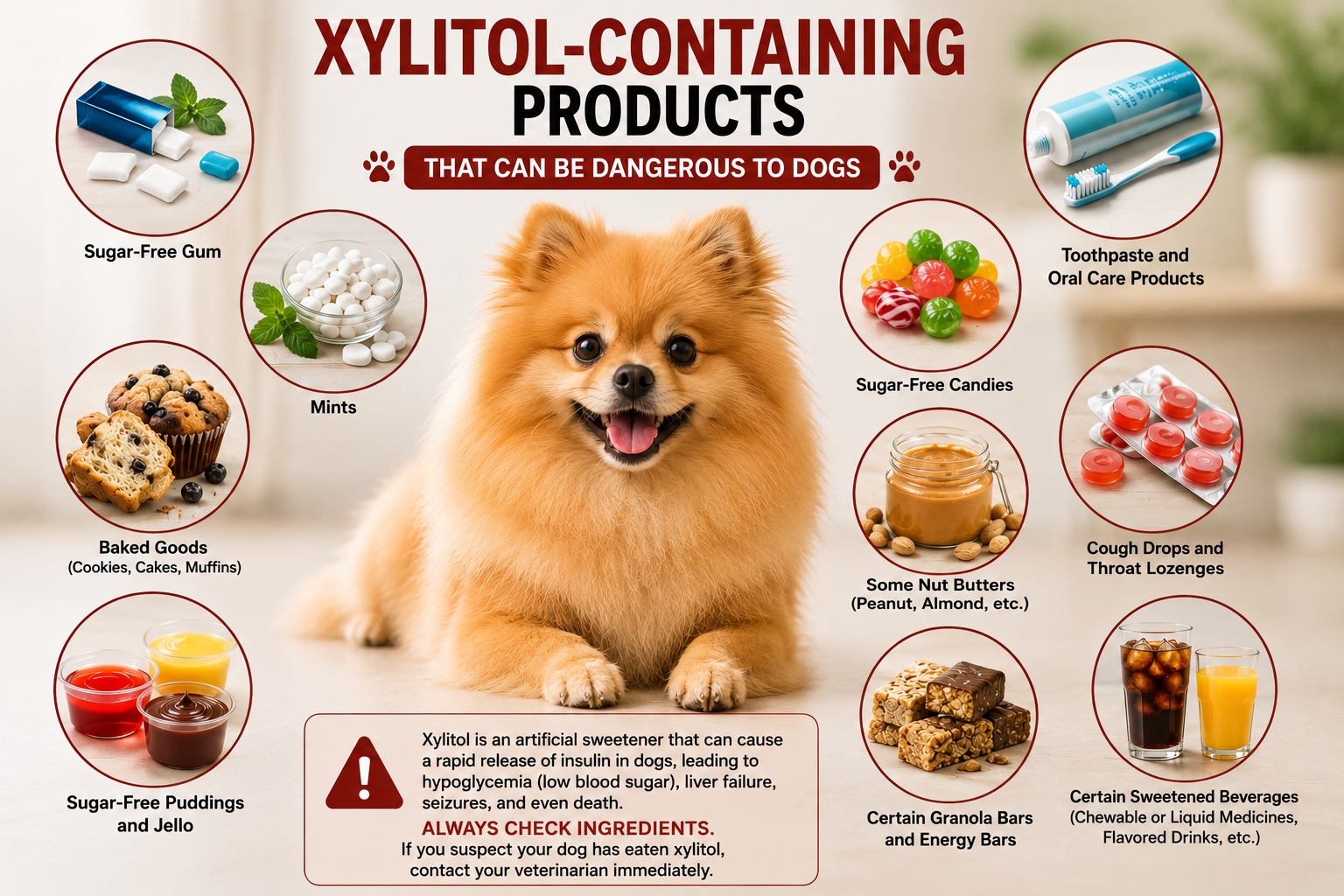
34. Can Dogs Eat Xylitol?
No. Xylitol is dangerous to dogs.
Xylitol is a sweetener found in some:
- Sugar-free gum
- Candies
- Baked goods
- Nut butters
- Dental products
- Medicines
- Supplements
Xylitol poisoning can cause dangerously low blood sugar and potentially severe complications. If your dog may have consumed xylitol, treat it as an urgent veterinary situation.
35. Can Dogs Eat Onions?
No. Dogs should not eat onions.
Onions belong to the Allium family and can damage red blood cells.
Onions may be found in:
- Cooked meals
- Sauces
- Soups
- Gravies
- Seasoning mixes
- Leftovers
36. Can Dogs Eat Garlic?
No. Garlic should be avoided.
Garlic is also part of the Allium family and can cause damage to red blood cells.
Garlic may be present in foods even when you do not see individual garlic pieces, so check sauces, seasonings, prepared foods, and leftovers.
37. Can Dogs Eat Chives?
No. Chives should not be given to dogs.
Chives are part of the Allium family along with onions, garlic, and leeks.
Avoid giving dogs foods containing chives or seasoning blends that contain them.
38. Can Dogs Eat Leeks?
No. Dogs should not eat leeks.
Like onions and garlic, leeks belong to the Allium family.
Avoid giving your dog foods, soups, or sauces containing leeks.
39. Can Dogs Eat Macadamia Nuts?
No. Macadamia nuts are toxic to dogs.
Possible signs of poisoning can include:
- Weakness
- Vomiting
- Lethargy
- Difficulty walking
- Tremors
Keep macadamia nuts and foods containing them away from dogs.
40. Can Dogs Drink Alcohol?
No. Dogs should never be given alcohol.
Alcohol can cause poisoning and can be particularly dangerous for smaller animals.
Keep alcoholic beverages and foods containing significant amounts of alcohol away from dogs.
41. Can Dogs Have Coffee?
No. Dogs should not consume coffee or other caffeinated drinks.
Caffeine can affect a dog’s nervous and cardiovascular systems.
Keep away:
- Coffee
- Espresso
- Energy drinks
- Caffeinated tea
- Caffeinated supplements
If your dog consumes a significant amount of caffeine, contact a veterinarian.
42. Can Dogs Have Energy Drinks?
No. Energy drinks should not be given to dogs.
They can contain significant amounts of caffeine and other stimulants.
Keep cans, bottles, and spilled drinks away from pets.
43. Can Dogs Eat Raw Yeast Dough?
No. Raw yeast dough can be dangerous to dogs.
Yeast dough can continue expanding inside the stomach.
It can also produce alcohol during fermentation.
Because of these risks, raw yeast dough should be kept completely away from dogs.
44. Can Dogs Eat Avocado?
It is best to avoid giving dogs avocado.
The pit creates an obstruction hazard, while the fruit is relatively high in fat and can cause digestive problems in some dogs.
There is little reason to take the risk when many other dog-friendly foods are available.
45. Can Dogs Eat Cherries?
It is safest not to give dogs whole cherries.
Cherry pits create choking and obstruction risks, while parts of the cherry plant contain compounds that can be harmful.
There is little reason to take the risk when many safer fruits are available.
46. Can Dogs Eat Raw Meat?
Raw meat is best avoided unless a veterinarian or qualified veterinary nutrition professional has helped you develop an appropriate feeding plan.
Raw animal products can carry bacteria such as Salmonella and E. coli, creating risks for pets and people.
47. Can Dogs Eat Raw Eggs?
Raw eggs are best avoided.
Raw eggs can carry bacterial contamination risks, and raw egg whites contain an enzyme that can interfere with biotin absorption.
Fully cooked eggs are a safer option.
48. Can Dogs Eat Cooked Bones?
No. Cooked bones should not be given to dogs.
Cooked bones can become brittle and splinter.
Potential problems include:
- Choking
- Mouth injuries
- Gastrointestinal injury
- Obstruction
- Perforation
49. Can Dogs Eat Very Salty Foods?
Dogs should not be given heavily salted foods.
Large amounts of salt can cause excessive thirst, vomiting, diarrhea, neurological signs, and other serious problems depending on the amount consumed.
Avoid sharing:
- Very salty chips
- Salted snacks
- Processed meats
- Heavily seasoned leftovers
50. Can Dogs Eat Bacon or Fatty Foods?
Bacon and very fatty human foods are best avoided.
These foods can be high in both fat and salt.
Even when a food is not specifically toxic, excessive fat can cause digestive problems and may contribute to serious health problems in susceptible dogs.
Choose a small portion of plain lean cooked meat instead.
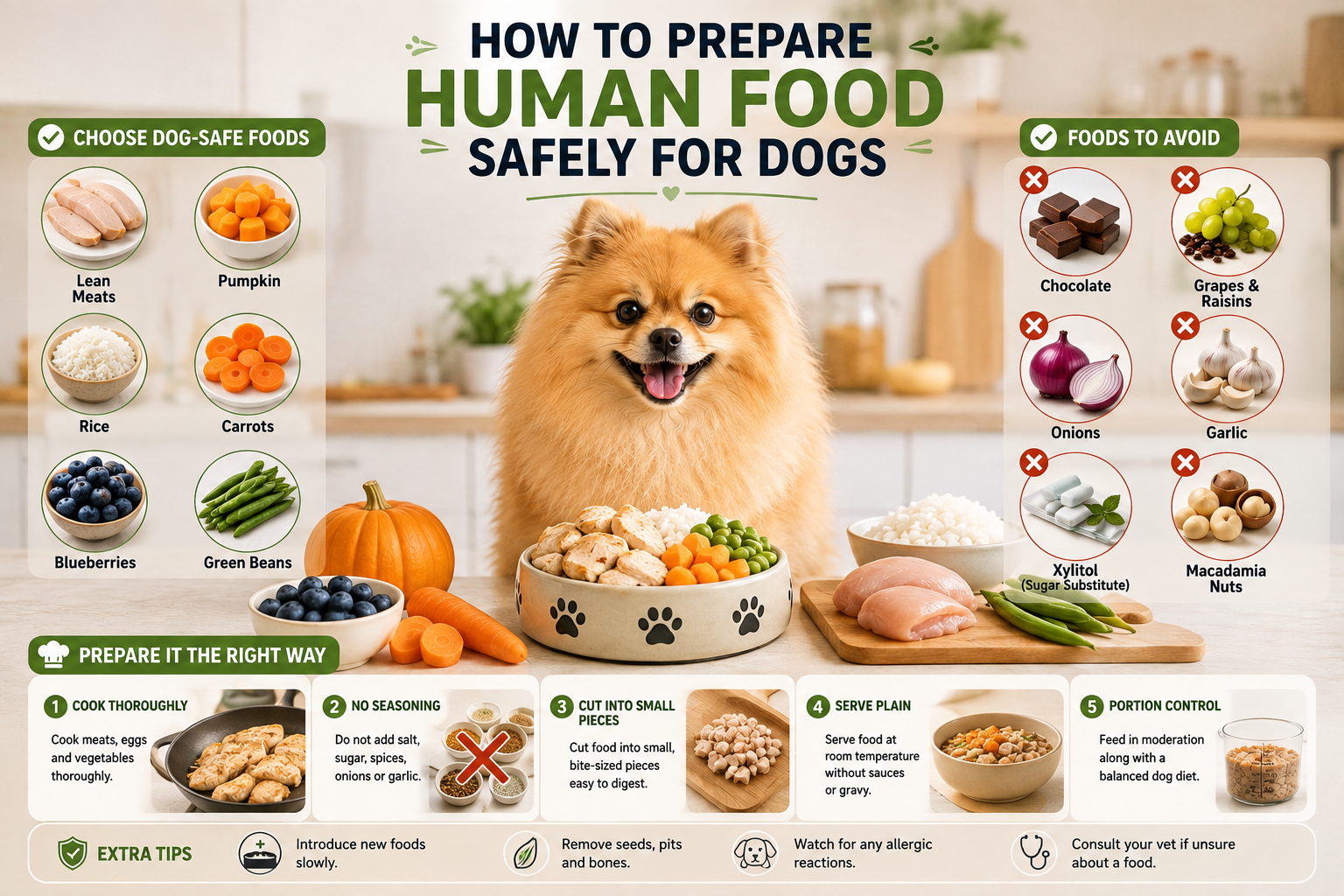
How to Safely Give Human Food to a Dog
Knowing which foods are safe is only half of the equation.
Preparation and portion size matter just as much.
1. Keep Human Food as a Treat
Your dog’s main diet should remain nutritionally complete and balanced.
Human foods should generally be occasional additions rather than the foundation of the diet.
2. Serve Food Plain
When sharing food with a dog, avoid:
- Salt
- Sugar
- Butter
- Heavy oils
- Spicy seasonings
- Sauces
- Onion
- Garlic
- Xylitol
A piece of plain cooked chicken is very different from a piece of seasoned restaurant chicken.
3. Remove Seeds, Pits, Cores, and Rinds
Depending on the food, remove:
- Apple seeds and core
- Fruit pits
- Watermelon seeds and rind
- Mango pit
- Tough fruit skins
- Corn cobs
Some parts can create choking or intestinal obstruction risks.
4. Cut Food Into Appropriate Pieces
Large pieces can create choking risks, especially for small dogs.
Cut food into pieces appropriate for the dog’s size and ability to chew.
5. Introduce New Foods Slowly
When trying a new food, start with a small amount.
Watch for:
- Vomiting
- Diarrhea
- Gas
- Itching
- Skin changes
- Other unusual reactions
If your dog develops concerning symptoms, stop the new food and contact your veterinarian.
6. Check Labels Carefully
This is particularly important for:
- Peanut butter
- Sugar-free products
- Candy
- Baked goods
- Protein products
- Supplements
Look for xylitol and other potentially harmful ingredients.
Can Dogs Eat Human Food Every Day?
Dogs can eat some human foods regularly in very small amounts, but that does not mean human food should become their primary diet.
A dog’s main food should provide the complete and balanced nutrition required for its life stage and individual needs.
Treats and human foods should fit into the overall feeding plan.
If your dog has:
- Diabetes
- Kidney disease
- Food allergies
- Pancreatitis
- Obesity
- Gastrointestinal disease
- Another medical condition
Ask your veterinarian before adding new foods.
What Should You Do If Your Dog Eats Something Toxic?
If you believe your dog has eaten a potentially toxic food, contact a veterinarian promptly.
Do not wait for symptoms to appear when you already know the food can be dangerous.
Have the following information available if possible:
- Your dog’s approximate weight
- The food or product eaten
- The ingredients
- Approximate amount eaten
- Time of ingestion
- Any symptoms you have noticed
Do not attempt to make your dog vomit unless a veterinary professional specifically tells you to do so.
If your dog is already showing severe symptoms such as collapse, seizures, difficulty breathing, severe weakness, or repeated vomiting, seek emergency veterinary care.
Common Mistakes When Giving Dogs Human Food
Giving Food From Your Plate
Restaurant and family meals often contain salt, spices, sauces, onions, garlic, butter, or other ingredients that are unsuitable for dogs.
Assuming “Natural” Means Safe
Natural foods can still be dangerous.
Grapes, raisins, and macadamia nuts are good examples.
Forgetting About Xylitol
Sugar-free products deserve particular attention.
Always check labels on peanut butter, candy, gum, baked products, and other foods marketed as sugar-free.
Giving Too Much of a Safe Food
A food can be safe but still inappropriate in large quantities.
For example, fruit contains natural sugar, while cheese and peanut butter can add significant calories and fat.
Ignoring the Rest of the Diet
Human foods should not crowd out a complete and balanced dog diet.
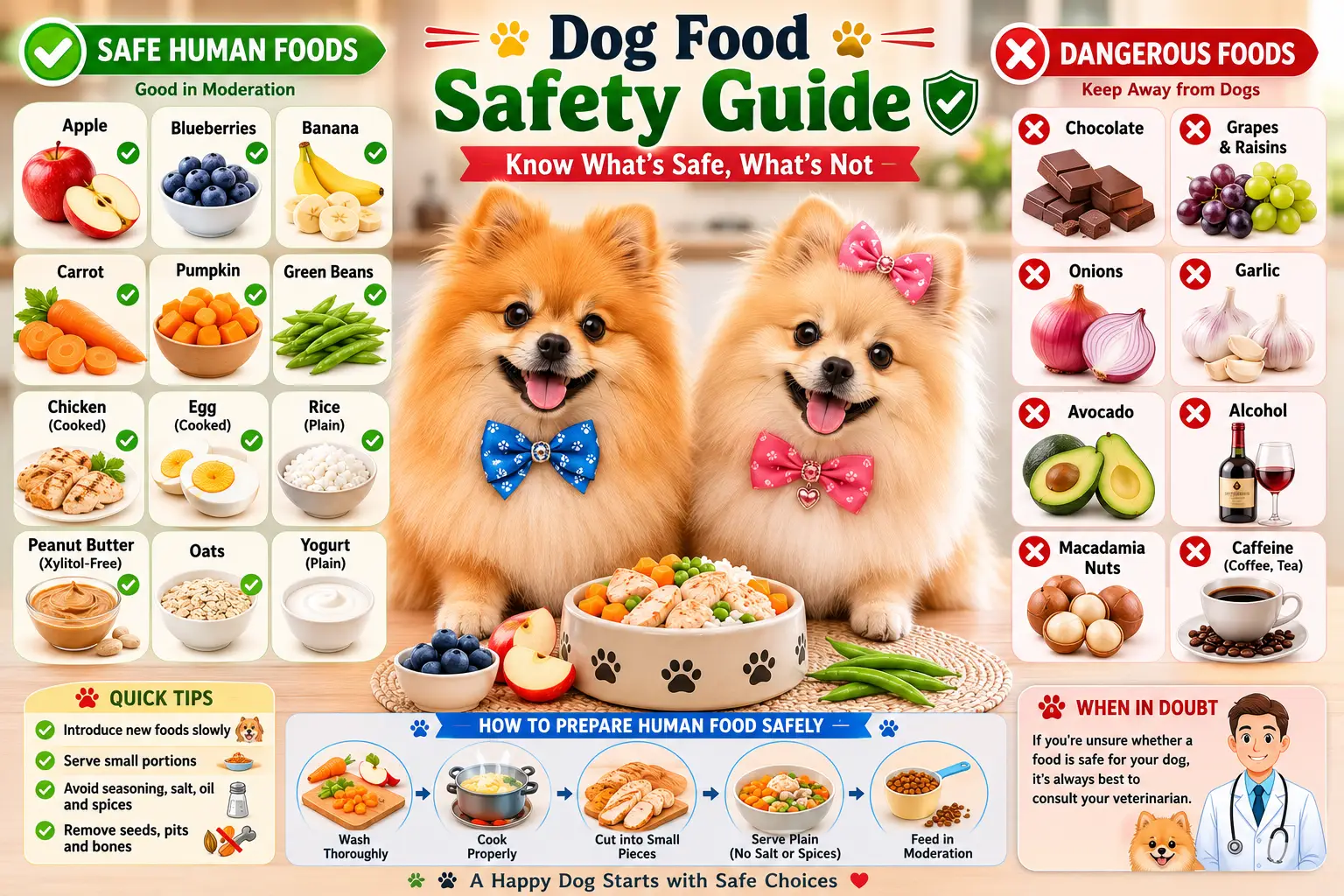
Quick Dog Food Safety Cheat Sheet
Not sure which human foods are safe for your dog? Use this quick cheat sheet to see which foods can be offered in moderation and which foods should be avoided completely. Always consider preparation, portion size, and your dog’s individual dietary needs when sharing human food.
Generally safe in moderation
- Apples, without seeds and core
- Bananas
- Blueberries
- Strawberries
- Watermelon, without seeds and rind
- Cantaloupe
- Mango, without pit
- Pineapple
- Carrots
- Green beans
- Peas
- Plain pumpkin
- Cooked sweet potato
- Small amounts of broccoli
- Celery
- Cucumber
- Corn kernels
- Lettuce
- Plain cooked rice
- Plain cooked oatmeal
- Cooked quinoa
- Fully cooked eggs
- Plain cooked chicken
- Plain cooked turkey
- Fully cooked salmon
- Fully cooked shrimp
- Plain yogurt, if tolerated
- Small amounts of plain cheese
- Xylitol-free peanut butter
- Plain air-popped popcorn
Avoid or never intentionally feed
- Chocolate
- Grapes
- Raisins
- Xylitol
- Onions
- Garlic
- Chives
- Leeks
- Macadamia nuts
- Alcohol
- Coffee
- Energy drinks
- Raw yeast dough
- Avocado
- Whole cherries
- Raw meat
- Raw eggs
- Cooked bones
- Very salty foods
- Bacon and very fatty foods
Frequently Asked Questions
What are the safest human foods for dogs?
Some commonly suitable options include plain cooked chicken, cooked eggs, carrots, green beans, blueberries, apples without seeds and core, bananas, plain pumpkin, cooked rice, and xylitol-free peanut butter. Portion size and preparation still matter.
What human foods should dogs never eat?
Important foods to avoid include chocolate, grapes, raisins, xylitol, onions, garlic, chives, leeks, macadamia nuts, alcohol, and caffeinated products.
Can dogs eat rice?
Yes. Plain, fully cooked rice can generally be given to dogs in moderation. Avoid rice prepared with onions, garlic, heavy seasoning, or excessive salt.
Can dogs eat eggs?
Yes. Fully cooked eggs can be an occasional food for many dogs. Raw eggs are best avoided because of bacterial and nutritional concerns.
Can dogs eat chicken?
Yes. Plain, fully cooked, boneless chicken can be given in moderation. Avoid seasoned chicken and never give cooked chicken bones.
Can dogs eat fruits?
Many fruits can be given as occasional treats, including apples, bananas, blueberries, strawberries, watermelon, and cantaloupe. Seeds, pits, cores, and rinds should be removed when appropriate.
Can dogs eat peanut butter?
Some peanut butter is suitable for dogs, but always check the label for xylitol. Choose a product without xylitol and give only a small amount.
Can dogs eat cheese?
Some dogs can tolerate small amounts of plain cheese, but dairy can cause digestive problems in some dogs and cheese can be high in fat.
What happens if my dog eats chocolate?
Chocolate can cause poisoning in dogs. The risk depends on factors such as the type and amount of chocolate and the dog’s size. Contact a veterinarian promptly rather than waiting for symptoms.
What should I do if my dog eats grapes or raisins?
Contact a veterinarian promptly. Grapes and raisins can cause serious kidney problems in dogs.
Is xylitol really dangerous for dogs?
Yes. Xylitol can cause dangerously low blood sugar and potentially severe complications. If your dog may have eaten xylitol, seek veterinary help immediately.
Can dogs eat human food every day?
Some human foods can be used as small treats, but a dog’s main diet should remain nutritionally complete and balanced. Human food should not replace the dog’s regular diet without appropriate veterinary nutrition guidance.
If your dog has already eaten one of the foods in this section, do not wait for symptoms to appear. Our emergency guide explains severity, how quickly signs show up and exactly what to tell your vet: What Human Foods Are Toxic to Dogs?
Final Takeaway: What Can Dogs Eat?
Many everyday human foods can be safely shared with dogs, but proper preparation, appropriate portions, and moderation are essential.
Dog-friendly options include plain cooked chicken, cooked eggs, carrots, green beans, blueberries, bananas, apples without seeds or the core, plain pumpkin, cooked rice, and xylitol-free peanut butter.
Just as important, remember the foods that should never be given to dogs: chocolate, grapes, raisins, xylitol, onions, garlic, chives, leeks, macadamia nuts, alcohol, and caffeine.
Most importantly, “safe” does not mean “healthy in unlimited amounts.” Your dog’s main diet should provide complete and balanced nutrition, while human foods should generally be offered only as occasional treats that fit their individual dietary and health needs.
For more practical advice on dog nutrition, health, grooming, exercise, puppy care, and everyday routines, explore the Complete Dog Care Guide and discover more helpful dog-care resources.